Every buying guide lists the same six things to compare. None of them mentions that for half of those six, most manufacturers do not publish a number at all.
Disclosure — some links on this page go to Amazon, and we earn a commission if you buy through them. It costs you nothing extra and it does not change what we recommend or in what order. The full disclosure.
Check the climb height first, then the brush construction, then the body height. Those three decide whether the robot reaches your rooms, survives your hair and fits under your furniture - and they are the three most buying guides leave out. Suction matters least of the specifications people compare on, because it is the one you cannot compare across brands.
There is a standard list of things to look for in a robot vacuum and it is roughly the same on every site: suction, battery life, mapping, mopping, the dock, the app. It is not a bad list. The problem is that it assumes the numbers exist.
They often do not. We maintain a spec sheet for 36 models and 29 of those are currently on sale. Across those 29, a published runtime exists for six. A published dustbin capacity exists for four. If your buying process involves comparing battery life, the honest situation is that four fifths of the market will not tell you.
How often each specification is actually published
Published figures across the 29 robot vacuums currently on sale here
What buying guides tell you to compare
Models publishing a figure
Verdict
Dock behavior (self-empty, wash, dry)
29 of 29
Always stated. Compare freely
Navigation system named
28 of 29
Named, but a name is not a capability
Main brush construction named
26 of 29
Almost always stated - and it is the row that matters most
Suction in pascals
22 of 29
Published often, comparable rarely
Mop lift height
11 of 29
Published by fewer than half
Threshold / climb height
11 of 29
The most decisive figure, published by fewer than half
Robot body height
9 of 29
Published by under a third
Runtime
6 of 29
Effectively unpublished
On-board dustbin capacity
4 of 29
Effectively unpublished
Counted 2026-10-17 across every non-discontinued model in our registry, from each maker's own product pages. A row describing suction in words rather than pascals is counted as unpublished. Every underlying figure is sourced on that model's spec sheet.
Read that table as a shopping instruction rather than a complaint. The specifications at the top are the ones you can genuinely use to choose between machines. The ones at the bottom are ones you will have to decide without.
1. Climb height — start here, not with suction
This is the figure that decides whether the robot cleans a room at all. A raised strip between your kitchen and your hall, a door sill, the lip into a bathroom: if the robot cannot get over it, no amount of suction matters, because it is not in the room. It is the single most common reason a robot disappoints someone whose house is otherwise ideal for one.
Published climb heights across every brand we cover
11 of 29 models publish this figure. Every number below links to the page it came from.
60mm over a series of steps, 42mm over a single step
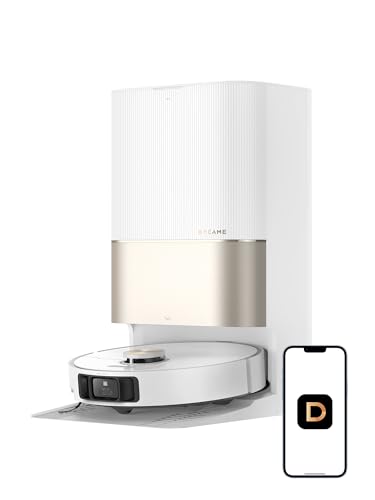
Dreame's own condition, quoted: "The gap between steps should be greater than 4cm. For a single obstacle crossing and a single vertical step, the highest obstacle crossing height is 4.2cm." The 6cm headline therefore does not describe a single door sill.Source: Dreame X50 Ultra product page — ProLeap step climbing (retrieved 2026-09-01)
Not stated on eufy's E28 page. A figure of 0.83in appears in a bundle comparison table elsewhere on eufy's site; because it is not on the product page for this variant we do not publish it.
Compiled from the manufacturers’ own published material — every row carries the date its figure was read. We have not measured any of these figures ourselves, see how we pick. Found an error? Tell us and we will correct it.
Go and measure your worst sill before you read any further. A tape measure and two minutes will narrow the field faster than any review. Then read the conditions on the figure, because they vary: Dreame states 60mm over a series of shallow steps and 42mm over one vertical step for the same machine, and Roborock's 40mm is a double-layer threshold rather than a single riser. The threshold table is the full cross-brand version with every condition attached.
If the brand you want publishes nothing here - iRobot and Shark publish no climb height for any model, ever - then you are buying on hope. That is a legitimate choice for a flat house with no sills. It is a bad one for anything else.
2. Brush construction — the row that decides your maintenance
Almost every maker names the brush, so this is checkable on 26 of 29 machines, and it predicts your weekly life with the robot better than any other single row. Rubber or finned brushes let hair travel into the bin. Bristle brushes let it wind around the core, where it eventually stalls the motor and drops the pickup until someone cuts it free with scissors.
If anyone in the house has long hair, or a dog or cat sheds, treat a bristle main brush as a disqualifier rather than a compromise. Rubber vs bristle brushes has the cross-brand comparison, and robot vacuums for long hair ranks the field on this single question.
3. Body height — the specification people discover too late
Published robot body height, where a maker states one
9 of 10 models publish this figure. Every number below links to the page it came from.
Compiled from the manufacturers’ own published material — every row carries the date its figure was read. We have not measured any of these figures ourselves, see how we pick. Found an error? Tell us and we will correct it.
Nine of 29 machines state how tall they are. The published range runs from 80mm to around 112mm, and that 30mm gap is exactly the difference between a robot that cleans under your sofa and one that wedges itself under it every week. Measure the lowest gap in your house - usually a couch, a bed frame or a kitchen kickboard - and if the brand will not tell you the height, assume it does not fit. Robot vacuums that fit under furniture ranks the ones that publish a number.
4. The dock, which is the part you actually live with
Every maker describes the dock, so this is the one row you can always compare. Three questions, in order of how much they will matter to you:
Does it empty itself, and for how long? Stated intervals here run from 30 days to 90. This is the single biggest quality-of-life difference in the category - see self-emptying dock or manual bin.
Bag or bagless? A bag is more expensive to run and seals the dust. A bagless base is cheaper and means you tip a dust cup into the trash yourself. If anyone in the house has allergies, pay for the bag - dander and allergies explains why.
Does it wash AND dry the mop pad, and with what? Washing without drying is how a pad goes musty in a week. Some makers publish a wash temperature, some publish a range, some say only "hot". How to stop the mop smelling musty is the consequence.
5. Suction — useful inside a brand, misleading across brands
Pascal figures are published for 22 of 29 machines, which makes suction look like the most comparable specification on the sheet. It is not, because there is no shared test behind it. Each maker measures on its own rig, and the figures have inflated steadily: the range on this site now runs from 5,300 Pa to 31,000 Pa, and the top of that range is not six times better at picking up dust than the bottom.
What a Pa figure does reliably tell you is where a machine sits in its own maker's range, which is genuinely useful when you are choosing between two models from one brand. The full argument, and the chart, are on robot vacuum suction power compared.
Shark publishes no numeric suction figure for any of its four machines, and iRobot publishes one for one of its five. Both still sell well, which tells you how little the number drives the market.
6. Mopping — decide the mechanism, not the score
If you want a mop, the choice that matters is mechanical rather than numerical. Spinning pads press and rotate; roller mops rinse themselves continuously as they run; one iRobot model retracts the pad onto the robot's back entirely. These behave differently on the same floor, and the published mop lift height - available on 11 of 29 machines - tells you whether a wet pad will end up on your rug.
Treat an unpublished figure as a worse answer than a mediocre published one. A stated 18mm climb height is more useful than a silent machine that might manage 30mm.
Never substitute a review site's measurement for a maker's figure. Nobody tests climb height the same way twice, and a number without a stated condition is not a specification.
Buy the brand that publishes, when the thing it publishes is your problem. Dreame states a climb height on four of five models, eufy on three of five. If your sills are the issue, that narrows the market usefully.
Accept the blanks on things you can return the robot over. Runtime and bin capacity are unpublished almost everywhere, and both are discoverable in the first week.
How we picked
Criteria first, products second. These are the things we ranked on, stated before anything is recommended.
Rank the criteria by whether you can check them, not by how much they are talked about. A specification nobody publishes cannot be part of a decision, however important it sounds.
Count disclosure across the whole live range, which is 29 currently-purchasable models from seven brands as of 2026-10-17, rather than cherry-picking the makers that look good.
A figure beats a phrase. "Extreme power-lifting suction" is counted as unpublished here, because it is.
Prefer dimensions you can verify at home. A climb height and a body height can be checked with a tape measure against your own floor. A pascal figure can only be compared with other pascal figures from the same maker.
No testing claims. We have not run any of these machines. See how we pick.
What we did not do: test any of these machines. We do not own one, we do not have a lab, and nothing on this page is written as though we did. The full method.
Quick picks
Ranked on the published specifications below. Tap a row to jump to the full write-up.
#
Product
Best for
Suction
Price
1
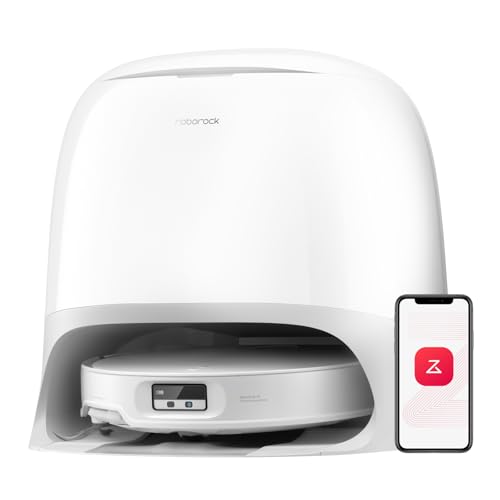
Roborock Qrevo CurvXThe highest published suction figure here paired with the highest published mop lift, which is the combination a mixed-floor home actually needs.
eufy Omni C20One of the two least powerful machines on this site on paper, and the one that tells you the most about itself for the money — suction, climb, mop lift, runtime, bin and body height are all published.
iRobot Roomba Max 715 PetDual rubber anti-tangle brushes and a 90-day allergen-sealed dock — and the one place iRobot has printed an actual suction number instead of a multiple.
One of the two least powerful machines on this site on paper, and the one that tells you the most about itself for the money — suction, climb, mop lift, runtime, bin and body height are all published.
All-in-One station: self-emptying into a stated 3.1L bag for up to 60 days in a pet-free home, mop washing, mop drying with room-temperature air, and water refilling from a 2.5L tankRoom-temperature drying rather than hot air. That is the single biggest difference between this station and the expensive ones, and it is the usual cause of a musty pad.Source: eufy Omni C20 product page — station (retrieved 2026-10-17)
What it does well
An 85mm body — among the flattest figures published by any maker here
Publishes suction, climb height, mop lift, runtime, dustbin capacity AND body height, which several machines at triple the price do not
A full station — self-empty, mop wash, mop dry and water refill — at the bottom of the range
What it does not
7,000 Pa sits near the bottom of the stated-suction range on this site
The station dries with room-temperature air, not hot air
eufy names an obstacle-avoidance method but no navigation system in the page text
Who it is for
A flat or a small house with low furniture and modest sills, where a full station at the lowest price matters more than a big suction figure.
Skip it if
You have deep carpet or a lot of pet hair. A stated 7,000 Pa sits near the bottom of every figure on this site, and no amount of disclosure changes what that means on a thick rug.
Dual rubber anti-tangle brushes and a 90-day allergen-sealed dock — and the one place iRobot has printed an actual suction number instead of a multiple.
It is the best illustration on this site of what this page is about, which is why it is here rather than in the ranking. Shark names its navigation hardware precisely - 360-degree LiDAR plus a 3D sensor - describes a NeverTouch Pro base that empties, refills, washes and dries, and then publishes no suction figure, no climb height, no mop lift, no runtime and no body height. Across all four Shark machines on this site, the count of published numeric suction figures is zero. The dock is genuinely good and the brand has a real service network; you simply cannot compare the robot with anything, which makes it the wrong machine to buy from a comparison.
Those four are not "the best robot vacuums" - they are the four that let you check the most before paying, at four different prices. If you would rather start from your floor problem than from a spec sheet, every hub on this site is organized that way: pet hair, carpet, hard floors, mopping, navigation and troubleshooting. And if this is your first robot, the beginner's guide argues for ignoring most of this page and checking only three things.
Questions people actually ask
+ What should I look for when buying a robot vacuum?
Check the published climb height first, because it decides whether the robot can reach every room in your house. Then the main brush construction, because rubber brushes handle hair and bristle brushes tangle. Then the robot's body height against your lowest furniture gap. Suction in pascals matters least, because every maker measures it differently.
+ How much suction does a robot vacuum need?
There is no honest cross-brand answer, because there is no shared test. Published figures on this site run from 5,300 Pa to 31,000 Pa, and the top is not six times more effective than the bottom. Use a Pa figure to rank machines within one brand's own range, where it is measured consistently, and use brush construction and carpet-boost behavior to judge performance on deep pile instead.
+ Which robot vacuum specification is most important?
The threshold climb height, for most houses. It is the figure that determines whether the robot gets over a door sill and into the next room, and a machine that cannot reach a room cleans none of it. It is also published by only 11 of the 29 models currently on sale here, which is why it is worth checking first rather than last.
+ Do I need a robot vacuum that mops?
Only if you have hard floors that get genuinely dirty, and only after you check the mop lift height if you also have rugs. A mop combo adds a water tank, pads, a washing station and a maintenance routine. Many people are better served by a vacuum-only robot plus a separate mop - the trade-off is set out in mop combo or two separate machines.
+ Is a more expensive robot vacuum better?
Not reliably, and not in the way you would expect on disclosure. The cheapest machine eufy sells publishes all nine specifications we track, while its four-figure flagship leaves three of them blank. Price buys station features - mop washing, hot-air drying, longer self-empty intervals - more consistently than it buys a better clean.
+ What is the first thing to check before buying a robot vacuum?
Two tape-measure jobs, both done before you read a single review: the height of the tallest door sill the robot must cross, and the height of the lowest gap under your furniture. Those two numbers eliminate more unsuitable machines than any other research you can do.