Disclosure — some links on this page go to Amazon, and we earn a commission if you buy through them. It costs you nothing extra and it does not change what we recommend or in what order. The full disclosure.
Long human hair beats brushes that cope with pet hair because a single strand can be longer than the roller is wide, so it wraps the axle several times before it stops. The designs that address it add a fixed comb, a spiral blade or a second roller that diverts strands to the end caps. Roborock, Dreame and eufy all publish one.
People who have never had this problem underestimate it. One person with waist-length hair in a household produces a brush that needs cutting free weekly, and a side brush that needs it more often. It is the most common reason a robot vacuum ends up in a cupboard.
Why long hair is a different problem from pet hair
Three properties, and all three work against the brush.
Length. A pet hair is a few centimeters and cannot complete a wrap around most rollers. A 60cm human hair can wrap a 25mm roller seven times.
Tensile strength. Human hair does not snap under the load a rotating brush applies. It tightens instead, and a tightened wrap migrates along the roller into the bearing.
It finds the bearing. Once inside the end cap the hair is out of reach of any self-cleaning mechanism and stays there, adding drag until the motor labours.
This is why an anti-tangle claim that only addresses the middle of the roller is not enough. The relevant question is what happens at the end caps.
What the published designs actually do
Anti-tangle brush designs, by model
7 of 7 models publish this figure. Every number below links to the page it came from.
Compiled from the manufacturers’ own published material — every row carries the date its figure was read. We have not measured any of these figures ourselves, see how we pick. Found an error? Tell us and we will correct it.
Roborock's DuoDivide splits the roller in two with spiral blades between them, which is a geometry answer rather than a cutting one. eufy's Pro-Detangle Comb is a fixed comb that sits against the roller and lifts wraps off as it turns. Roborock's cheaper JawScrapers Comb on the Q7 M5 is the same principle at a lower price. Dreame states its DuoBrush is fully detangling without describing the mechanism, which is a weaker claim but at least a stated one.
How we picked
Criteria first, products second. These are the things we ranked on, stated before anything is recommended.
A published anti-tangle main brush design. Not a marketing name on its own — a description of what the hardware does.
Whether the side brush is also addressed. It is the part that winds worst and the part most makers ignore.
How easy the brush is to remove and clear, since no design eliminates the job entirely.
A self-emptying dock, because long hair is bulky and blocks a small bin quickly.
Published specifications generally. A maker that will not state its brush design gets ranked below one that will.
What we did not do: test any of these machines. We do not own one, we do not have a lab, and nothing on this page is written as though we did. The full method.
Quick picks
Ranked on the published specifications below. Tap a row to jump to the full write-up.
#
Product
Best for
Main brush
Price
1
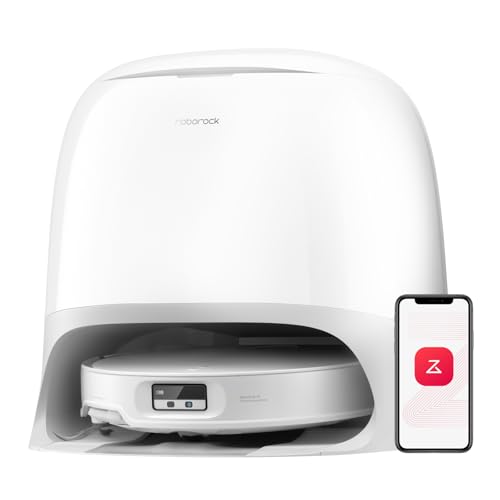
Roborock Qrevo CurvXThe highest published suction figure here paired with the highest published mop lift, which is the combination a mixed-floor home actually needs.
Dreame L40s UltraStates 40mm of obstacle clearing and a fully detangling brush, which covers the two problems that actually send robots back to the shop.
eufy X10 Pro Omnieufy publishes an obstacle clearance, a mop lift, two runtimes and both tank capacities — more of its own numbers than any other maker here.
The most completely published spec sheet
Auto-detangling roller brush with Pro-Detangle Comb
It is the cheapest Roomba that maps properly, and for a hard-floor home where nobody has long hair it is a sensible buy. For long hair it is the wrong one. iRobot fits the 105 with a Multi-Surface bristle brush rather than the dual rubber brushes it puts on its Max range, and makes no anti-tangle claim for it anywhere. Bristles are the construction long strands wind into, and on this page the brush construction is the entire question.
Living with it, whatever you buy
No brush design removes the job entirely, and any marketing that implies otherwise is overselling. What a good design changes is the frequency and the difficulty: monthly instead of weekly, and a wrap that pulls off in one piece instead of one that needs scissors and patience. Take the end caps off when you clear it — that is where the wraps that cause real damage live.
If you already own a robot that is jamming, the ten-minute maintenance pass will tell you whether the brush is the cause before you spend anything. On a hard floor it is the side brush rather than the roller that does most of the winding, which is the argument in pet hair on hardwood floors. For a combo that has to mop those floors too, the best mop combos for pet hair weighs the side brush against the mop lift.
Questions people actually ask
+ What is the best robot vacuum for long human hair?
One with a published anti-tangle main brush and an anti-tangle side brush. The designs that specifically address long strands are Roborock's DuoDivide and JawScrapers, eufy's Pro-Detangle Comb, and Dreame's DuoBrush. The comparison above shows exactly what each maker states.
+ Do anti-tangle brushes really work?
They reduce the problem substantially rather than eliminating it. Expect to clear the brush monthly instead of weekly, and expect the hair to come off in one piece. Any claim of zero maintenance is overselling.
+ Why does hair wrap the side brush more than the main brush?
Because the side brush is a thin spinning arm with nothing to divert strands away from its hub, and most anti-tangle engineering has gone into the main brush. Check whether the maker addresses the side brush too — several do not.
+ Can I cut the hair off with scissors?
Yes, and most brushes have a molded groove along the housing to guide the blade. Power the robot off first, and take the end caps off afterwards — the wrap inside the bearing is the one that actually damages the machine.