Disclosure — some links on this page go to Amazon, and we earn a commission if you buy through them. It costs you nothing extra and it does not change what we recommend or in what order. The full disclosure.
Rubber and silicone rollers flex as hair passes over them, so strands slide along rather than wrapping the axle. Bristle brushes grip, which is what sweeps debris out of carpet and also what winds long hair into a collar. Current flagships almost all use rubber or a dual-roller variant, and say so.
If you have an animal that sheds, or anyone in the house with long hair, this is the specification that decides how much of your life the robot gives back. Everything else on the box is a refinement. A brush that jams is a robot that stops.
What each design actually does
Bristle brushes
Stiff tufts, usually in a spiral along the roller. They agitate carpet pile mechanically, which is genuinely good at lifting embedded grit, and they grip hair with equal enthusiasm. Once a strand wraps the axle it pulls the next strand in with it, and within a fortnight of a shedding dog you have a felted collar that stops the roller turning freely. The motor keeps driving, the roller does not, and pickup falls off a cliff.
Nobody sells a purely bristled main brush at the top of the market any more. That is not marketing fashion; it is the industry conceding the point.
Rubber and silicone rollers
A molded roller with flexible fins instead of tufts. The fins deform as they meet the floor, which keeps contact without gripping, and hair tends to travel along the roller toward the end cap rather than winding around the middle. What does collect is easy to pull off in one piece. iRobot uses dual multi-surface rubber brushes and describes them as such; ECOVACS states a rubber main brush with its ZeroTangle 2.0 system.
The trade-off is on deep carpet, where a soft fin agitates less aggressively than a stiff bristle. In practice suction and carpet boost compensate for most of that, and a rubber roller that keeps turning beats a bristle brush that has stopped.
Dual rollers and comb designs
The current answer at the top of the range. Roborock's DuoDivide is described on its own product page as two parallel short-bristle rollers with spiral blades — the blades divert hair toward the ends rather than letting it settle in the middle. eufy pairs an auto-detangling roller brush with a fixed Pro-Detangle Comb. Roborock's cheaper Q7 M5 uses a JawScrapers Comb. Dreame states its DuoBrush is fully detangling and supplies two roller options, a bristled rubber brush for hard floors and a TPU rubber brush for carpet.
Main brush construction in each maker's own words
26 of 29 models publish this figure. Every number below links to the page it came from.
The page for this variant describes the mop roller in detail and never describes the main vacuum brush. Dreame's other regional pages name a brush for this model; because they disagree with each other on component names, we do not carry a figure across.
Compiled from the manufacturers’ own published material — every row carries the date its figure was read. We have not measured any of these figures ourselves, see how we pick. Found an error? Tell us and we will correct it.
The blanks in that table are the interesting part. Shark markets a self-cleaning brushroll on both models here and never states what it is made of or how the self-cleaning works. Roborock describes the DuoDivide down to its geometry on its Curv series page. Those are choices, and for a hair buyer they are informative ones.
The side brush matters more than people think
The main brush gets the attention, but the side brush is what flicks debris in from the edges — and it is also the part most likely to wind long hair, because it is a thin spinning arm with nothing to divert strands away from the hub. Roborock's FlexiArm side brushes and the anti-tangle side brushes in its Dual Anti-Tangle System exist because of this. If a maker describes an anti-tangle main brush and says nothing about the side brush, expect to be cutting hair off the side brush.
Which to buy
If anyone in the house sheds — animal or human — buy a published anti-tangle design and treat the suction figure as a tiebreak. The three picks below are the clearest published examples of the two designs that work: a dual-roller with blades, a pair of rubber brushes, and a roller with a fixed comb.
Quick picks
Ranked on the published specifications below. Tap a row to jump to the full write-up.
#
Product
Best for
Main brush
Price
1
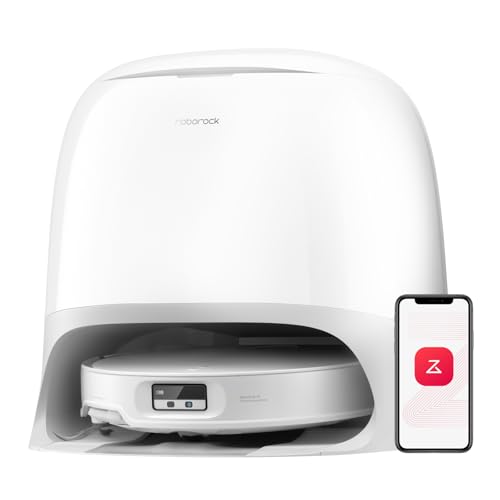
Roborock Qrevo CurvXThe highest published suction figure here paired with the highest published mop lift, which is the combination a mixed-floor home actually needs.
iRobot Roomba Combo j9+The mop arm retracts to the top of the robot rather than lifting a few millimeters, so it can mop and vacuum in one pass without routing around rugs.
Mopping without avoiding the carpet
Dual multi-surface rubber brushes with an edge-sweeping brush
eufy X10 Pro Omnieufy publishes an obstacle clearance, a mop lift, two runtimes and both tank capacities — more of its own numbers than any other maker here.
The most completely published spec sheet
Auto-detangling roller brush with Pro-Detangle Comb
If you are choosing between models on hair specifically, the other half of the decision is what happens to that hair once it is in the bin. A shedding animal fills a small bin fast, which is covered on self-emptying versus a manual bin. Long human hair behaves differently again — see long hair and tangles. The ranked picks that follow from this argument are in best robot vacuums for pet hair, and the brand that ships both constructions at once is covered in is a Roomba worth it.
Questions people actually ask
+ Is a rubber brush better than a bristle brush?
For hair, yes, and not marginally. For lifting embedded grit out of deep carpet a stiff bristle does more mechanical work. Since most people buying a robot for hair also have hair on carpet, the rubber or dual-roller designs win the combined case.
+ What is an anti-tangle brush?
A main brush with something built in that stops hair settling around the axle — a spiral blade, a fixed comb, a scraper, or a two-roller geometry that pushes strands toward the end caps. Different makers use different names for the same idea.
+ Do I still have to clean an anti-tangle brush?
Yes, just far less often and far more easily. Hair still collects at the end caps and in the bearings. Expect to clear it monthly rather than weekly, and expect it to come off in one piece rather than needing scissors.
+ Which brands publish their brush design?
Roborock, Dreame, eufy, ECOVACS and iRobot all describe theirs on their own pages. Shark names a self-cleaning brushroll on both models we cover without describing it. The comparison table above shows exactly what each one states.