Hair is a brush problem before it is a suction problem. Here is what each manufacturer actually publishes about its brush, and which models say nothing at all.
Disclosure — some links on this page go to Amazon, and we earn a commission if you buy through them. It costs you nothing extra and it does not change what we recommend or in what order. The full disclosure.
For pet hair, the brush decides everything. A rubber or dual-roller anti-tangle brush keeps working; a bristle brush winds hair into a solid collar within days. Of the models here, Roborock, Dreame, eufy and iRobot all publish an anti-tangle brush design. Shark and the cheaper Roborock trims publish nothing about theirs.
Every roundup you will read about pet hair leads with a suction number. That is the wrong number. Suction moves hair the moment it is loose on the floor; it does nothing about what happens after the hair reaches the brush. If the brush winds, you are not buying a vacuum, you are buying a weekly appointment with a seam ripper.
So this page is organized around what manufacturers publish about their brushes, and where they publish nothing. It also flags the second problem nobody advertises: a shedding dog fills a bin fast, which is what makes a self-emptying dock the difference between a robot that runs daily and one that stops mid-room every afternoon.
The brush is the spec, not the suction
There are broadly three main-brush designs on sale right now, and the differences are not subtle in a house with a shedding animal.
Bristle brushes sweep well and wind hair. Long hair, human or animal, wraps the axle and then the brush stops turning freely. Almost nobody sells a purely bristled main brush at the top of the market any more, which is itself informative.
Rubber or silicone rollers flex instead of gripping. Hair slides along the roller rather than wrapping, and what does wrap is easy to pull free. ECOVACS and iRobot both use rubber main brushes and say so.
Dual-roller and comb designs — Roborock's DuoDivide, Dreame's DuoBrush, eufy's Pro-Detangle Comb, Roborock's JawScrapers — add a fixed cutter or a second roller that severs or diverts hair before it can form a collar. These are the designs specifically marketed at this problem.
Main brush design, as each manufacturer describes it
9 of 9 models publish this figure. Every number below links to the page it came from.
Compiled from the manufacturers’ own published material — every row carries the date its figure was read. We have not measured any of these figures ourselves, see how we pick. Found an error? Tell us and we will correct it.
Read that table for the blanks as much as the entries. Roborock describes the DuoDivide brush down to its geometry on its Curv series page. Shark markets a self-cleaning brushroll on both of its models here and never says what it is made of. Those gaps are not us failing to find the number; they are the manufacturer choosing not to state one.
Why a shedding dog makes the dock a requirement
A robot vacuum's on-board bin is small. ECOVACS is one of the few brands that prints the figure at all — 0.22 liters on the X9 PRO OMNI, and Dreame states 395ml on the X50 Ultra. In a house with one heavy-shedding dog, either of those fills inside a couple of runs. When the bin is full the robot either stops or keeps driving with nowhere to put anything.
That is the practical case for a self-emptying dock in a pet house, and it is a much better reason than the marketing one. It is not about never touching dust. It is about the robot being able to finish the room. If you are choosing between a higher suction figure and a self-emptying base at the same price, the base is the one that changes your week.
Cat households have a different problem
Cat hair is finer and shorter than dog hair, so it tangles less and floats more. The brush matters less; filtration and litter tracking matter more. Litter granules are heavy, abrasive and get scattered several feet from the tray, which is a suction and a bin-durability question rather than a brush one. That has its own page: robot vacuums and cat litter.
If the person in the house is allergic rather than merely tidy, the filter is the component that matters and the dock is where the exposure happens. That is covered on allergies, dander and HEPA filtration. And if the animal is a puppy or an older dog, the obstacle that matters most is the one nobody wants to think about: robot vacuums and pet accidents.
Quick picks
Ranked on the published specifications below. Tap a row to jump to the full write-up.
#
Product
Best for
Main brush
Price
1
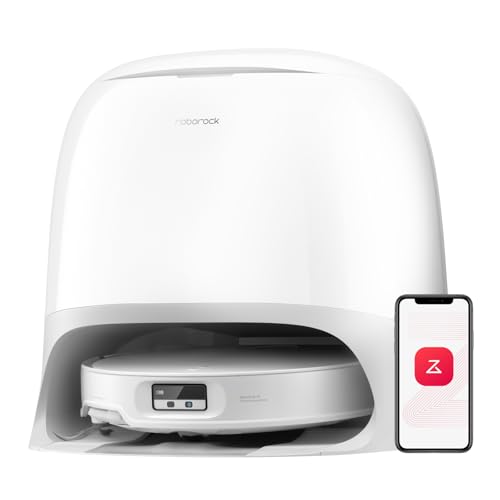
Roborock Qrevo CurvXThe highest published suction figure here paired with the highest published mop lift, which is the combination a mixed-floor home actually needs.
eufy X10 Pro Omnieufy publishes an obstacle clearance, a mop lift, two runtimes and both tank capacities — more of its own numbers than any other maker here.
The most completely published spec sheet
Auto-detangling roller brush with Pro-Detangle Comb
Dreame L40s UltraStates 40mm of obstacle clearing and a fully detangling brush, which covers the two problems that actually send robots back to the shop.
iRobot Roomba Combo j9+The mop arm retracts to the top of the robot rather than lifting a few millimeters, so it can mop and vacuum in one pass without routing around rugs.
Mopping without avoiding the carpet
Dual multi-surface rubber brushes with an edge-sweeping brush
It is regularly the cheapest way to get a full washing dock, and for a hard-floor home with light shedding that is a fair trade. For pet hair specifically it is the wrong buy: Dreame publishes no brush construction for it at all, and its 5,300 Pa is the lowest stated suction in this comparison. You would be buying the dock and hoping about the part that does the work.
Skip this one
Shark Matrix Plus 2-in-1
The HEPA base is genuinely useful if dander is your problem rather than visible hair. But "self-cleaning brushroll" is the entire published description of the brush — no material, no geometry, no suction figure to go with it. If the brush spec is the thing you are shopping on, this listing does not give you one to shop with.
How to choose in one paragraph
If your animal sheds heavily and you have carpet, buy the anti-tangle brush and the self-emptying dock, and treat the suction number as a tiebreak. If you have hard floors and a cat, spend the money on filtration and a dock that seals when it empties. If your budget is tight, an anti-tangle brush on a cheaper model beats a bigger suction figure on a bristle brush every time — that is the one trade in this category where the cheaper option is genuinely the better one. The ranked version of that argument, model by model, is best robot vacuums for pet hair.
One more thing worth checking before you buy: whether the robot can get into the rooms where the hair actually is. Doorway sills stop more robots than dirt does. If your house has raised thresholds, read the cross-brand threshold climb table before you spend anything.
Go deeper on pet hair
If you are not sure where to start, read the brush comparison first. It is the single spec that decides whether you will be cutting hair off a roller every week.
Its Amazon listing now reads "Currently unavailable" with no seller offering it, and we could find no live listing of the same model, so on 2026-09-17 it stopped being our top pick here. The Qrevo CurvX replaces it: the same DuoDivide brush family with a FlexiArm Arc side brush added, and the same published 17mm mop lift. The Curv's spec sheet stays on its own page as a record of what Roborock published.
+ Do robot vacuums work with pet hair?
Yes, provided the brush is designed for it. The failure people describe as "it does not pick up hair" is almost always a wound brush that has stopped rotating freely, not a suction problem. A rubber or dual-roller anti-tangle brush plus a self-emptying dock handles a shedding animal day to day.
+ Is a robot vacuum good for pet hair on carpet?
It is the hardest case in the category, because carpet holds hair in the pile instead of letting it sit loose on the surface. You want carpet boost, an anti-tangle brush and realistic expectations: a robot run daily keeps carpet on top of shedding far better than an upright run weekly. See robot vacuums for carpet.
+ Are robot vacuums safe for cats?
Physically, yes — the cliff sensors and bump sensors that stop them falling downstairs also stop them driving into an animal. The real risks are a cat that finds the running robot stressful, and a litter tray in the robot's path. Set a no-go zone around the tray and run it while the house is empty for the first week.
+ Does vacuuming a dog help with shedding?
Some dogs tolerate a grooming attachment on a canister vacuum and it does remove loose undercoat, but that is a different machine from anything on this page. A robot vacuum manages hair after it lands. Nothing here is designed to be used on an animal, and none should be.
+ What is the best robot vacuum for long hair?
Long human hair behaves worse than most pet hair because it is stronger and longer than the brush is wide. The models that specifically address it are the ones with a comb or cutter built into the brush housing. That comparison has its own page: long hair and tangles.
+ Do I need self-emptying for pet hair?
You need it more than most buyers do. On-board bins are small — where makers publish the figure at all it is a fraction of a liter — and a heavy shedder fills one in a run or two. Without a dock the robot stops before it finishes the floor, which is the thing you bought it to do.