Disclosure — some links on this page go to Amazon, and we earn a commission if you buy through them. It costs you nothing extra and it does not change what we recommend or in what order. The full disclosure.
Pet allergy is a reaction to proteins in dander, saliva and urine, not to hair. Hair matters because dander travels on it. So the useful question is not how much hair the robot picks up, but whether the fine material stays inside the machine — during the run, and at the moment the bin is emptied.
This page is about a household where somebody reacts, not one that merely wants tidy floors. The buying priorities are genuinely different, and the specification that matters most is the one almost nobody compares.
Where the exposure actually happens
Three moments, in increasing order of how much they matter and decreasing order of how much attention they get.
During the run. The robot's exhaust passes through its filter. A sealed path and a fine filter keep the fine fraction inside. This is what HEPA marketing is about and it is the least of the three.
Agitation. A rotating brush lifts settled dander into the air whether or not the vacuum captures it. Running the robot while the allergic person is out of the room is free and does more than any filter upgrade.
Emptying. Tipping a bin or a bagless base releases a visible cloud of exactly the material you were trying to remove. This is the single largest exposure event and it is the one people never think about when comparing models.
What HEPA means, and what it does not
True HEPA is a defined efficiency at a defined particle size, and Shark states 99.97 percent for the base on the Matrix Plus. It is a real specification and worth having. What it does not tell you is whether the rest of the machine leaks — a fine filter in a housing that lets air bypass it is a filter doing very little. Sealed-system claims are what would answer that, and almost no robot vacuum maker publishes one.
So treat HEPA as necessary rather than sufficient, and put more weight on the emptying mechanism, which you can actually observe.
The rest of the routine
Run it daily. Frequency does more than power here. Dander settles continuously and a daily pass keeps the standing load down in a way a weekly deep clean does not.
Hard floors help. Carpet stores dander in the pile and releases it when disturbed. If someone in the house reacts badly and you are already replacing flooring, that is the intervention with the largest effect — see hard floors.
Do the change of bag outside if you can, or at least away from the room the allergic person uses.
Wash the filter only if the manual says it is washable, and dry it completely. A damp filter grows exactly what you do not want in an air path.
Quick picks
Ranked on the published specifications below. Tap a row to jump to the full write-up.
#
Product
Best for
Main brush
Price
1
Shark Matrix Plus 2-in-1LiDAR mapping, HEPA filtration and a self-cleaning brushroll at a price well under the flagship docks.
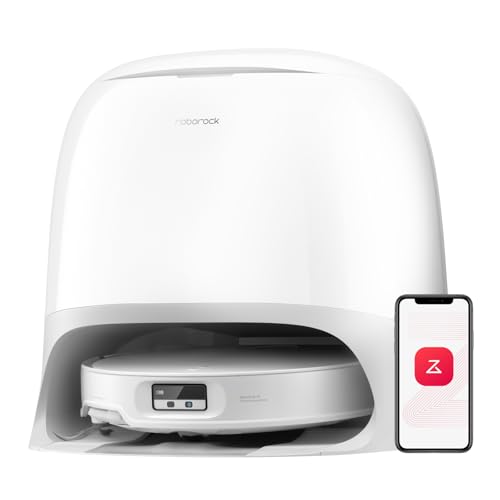
Roborock Qrevo CurvXThe highest published suction figure here paired with the highest published mop lift, which is the combination a mixed-floor home actually needs.
eufy X10 Pro Omnieufy publishes an obstacle clearance, a mop lift, two runtimes and both tank capacities — more of its own numbers than any other maker here.
The most completely published spec sheet
Auto-detangling roller brush with Pro-Detangle Comb
One honest limitation: no robot vacuum is a medical device and none of this is medical advice. If someone in the house has a serious reaction, the flooring, the ventilation and where the animal sleeps will all matter more than which robot you buy. Where the robot does matter, best robot vacuums for pet hair ranks the sealed docks alongside the brushes, and pet hair on hardwood covers the surface dander settles on.
Questions people actually ask
+ Do robot vacuums help with pet allergies?
They help by running often, which keeps the standing dander load lower than a weekly clean does. They are one part of a routine rather than a solution, and the emptying step matters as much as the filter.
+ Is HEPA filtration worth it on a robot vacuum?
It is worth having and it is not the whole story. A fine filter in an unsealed housing lets air bypass it. Since almost no maker publishes a sealed-system claim, weight the emptying mechanism — bagged versus bagless versus hand-emptied — more heavily than the filter grade.
+ Bagged or bagless for allergies?
Bagged, clearly. The bag seals when you remove it, so the material you collected stays collected. A bagless base has to be tipped out, which produces the dust cloud you were trying to avoid.
+ Does a robot vacuum help with cat allergies?
Same principle: the allergen is a protein carried on dander and saliva-groomed fur, and frequent removal lowers the standing load. Cat households also have litter tracking to deal with, which is covered on cat litter.