Disclosure — some links on this page go to Amazon, and we earn a commission if you buy through them. It costs you nothing extra and it does not change what we recommend or in what order. The full disclosure.
For pet hair the brush matters more than the suction. A rubber or dual-roller anti-tangle brush carries hair to the bin; a bristle brush winds it into a collar around the axle. Roborock, Dreame and eufy all publish an anti-tangle design and a Pa figure. iRobot publishes the brush but states suction as a multiple rather than a number.
Every robot vacuum on sale is marketed as good with pet hair. It is the single most common claim in the category, and it is made just as loudly by machines that are bad at it. The claim is not worth reading. What is worth reading is the brush specification underneath it, because pet hair is a mechanical problem — the hair has to be got off the floor, past the roller, and into the bin without wrapping anything on the way — and only one part of the machine decides that.
Why suction is the wrong number to shop on
Pet hair is light. Lifting it off a hard floor takes very little air, and lifting it out of carpet pile takes agitation rather than vacuum. A 22,000 Pa machine and an 8,000 Pa machine will both pick a drift of dog hair off a kitchen floor. What separates them a month later is whether the hair they picked up is in the dustbin or wound around the brush bearing.
That is why the suction chart sits in the carpet hub rather than this one. Pa matters when you are pulling grit out of deep pile. For hair it is close to irrelevant, and treating it as the headline number is how people end up with an expensive robot they stop using because clearing it is a weekly job with scissors.
The specification that actually decides it
Three brush constructions turn up in this price range, and they behave completely differently with hair.
Bristle. Rows of stiff filaments. Hair catches between the rows, works its way down to the axle and tightens into a collar. Effective on carpet grit, worst case for hair.
Rubber or silicone fin. A molded roller with flexible fins and no gaps for hair to settle into. Hair rides the surface into the airflow instead of burying itself.
Dual roller or comb-assisted. Two counter-rotating rollers, or a single roller with a fixed comb or blade held against it, which lifts wraps off as the roller turns. This is what most current anti-tangle marketing describes.
The full cross-brand version of this, including the makers who publish nothing at all, is in rubber vs bristle brushes. Here is what the models in this roundup state.
Published main brush construction, by model
7 of 7 models publish this figure. Every number below links to the page it came from.
Compiled from the manufacturers’ own published material — every row carries the date its figure was read. We have not measured any of these figures ourselves, see how we pick. Found an error? Tell us and we will correct it.
Two things stand out. The first is that Roborock, Dreame and eufy all describe a mechanism, while Shark gives a name — "self-cleaning brushroll" — and no description of what makes it self-cleaning. The second is that iRobot fits two completely different brushes across its own range: dual rubber anti-tangle brushes on the Max 715, and a Multi-Surface bristle brush on the 105. Same brand, same year, opposite answers to the same question.
The side brush is the part that gets ignored
Ask anyone who has owned a robot vacuum in a house with a long-haired dog which part they clear most often and they will say the side brush. It is a three-armed spinner on an exposed hub, turning at speed, with nothing between the arms and the bearing. Hair that touches it winds immediately and keeps winding.
Only two makers in this roundup address it explicitly. Roborock states a FlexiArm Arc side brush on the CurvX, and iRobot states an anti-tangle side brush on the Max 715. Everyone else engineers the main roller, publishes the result, and leaves the part that winds worst exactly as it was. When you are comparing two otherwise similar machines, this is the tiebreaker.
Where the hair goes next: the dock
Hair is bulky rather than heavy. A bin that holds a fortnight of ordinary dust in a normal house holds a few days of it in a shedding one, and a robot with a full bin keeps running and stops collecting. That is why a self-emptying dock is closer to a requirement than a luxury here, and why the stated interval is worth reading rather than skimming.
What each dock does, and the interval its maker states
6 of 6 models publish this figure. Every number below links to the page it came from.
Compiled from the manufacturers’ own published material — every row carries the date its figure was read. We have not measured any of these figures ourselves, see how we pick. Found an error? Tell us and we will correct it.
One dock claim here is different in kind. iRobot states that the Max 715's AllergenLock bag is sealed and captures particles down to 0.7 microns. That is a filtration claim about the bag rather than a convenience claim about the interval, and for a household where somebody reacts to dander it is the most relevant line on the whole spec sheet. Filters, docks and dander goes through what those numbers do and do not mean.
How we picked
Criteria first, products second. These are the things we ranked on, stated before anything is recommended.
A published main brush construction — rubber, roller or dual, described rather than just given a trademark. This is the specification that decides whether hair wraps or gets carried to the bin.
Whether the side brush is addressed too. It is a thin spinning arm with nothing to divert strands off its hub, it winds worse than the roller, and most makers say nothing about it.
The self-empty interval, and whether the dock bag is sealed. Hair is bulky, it fills a small on-board bin in days, and for an allergy household what the bag traps matters as much as how often you touch it.
A published suction figure in Pa. Not a multiple of an unnamed baseline — a number you can hold against another maker's number.
Mop lift, on models that mop, because a wet pad dragged across the carpet a dog sleeps on undoes the vacuuming.
What we did not do: test any of these machines. We do not own one, we do not have a lab, and nothing on this page is written as though we did. The full method.
Quick picks
Ranked on the published specifications below. Tap a row to jump to the full write-up.
#
Product
Best for
Main brush
Price
1
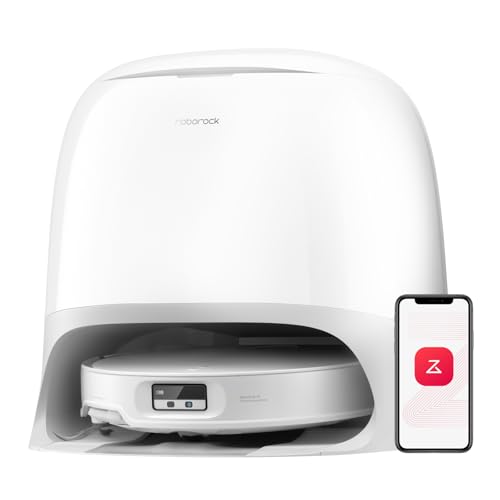
Roborock Qrevo CurvXThe highest published suction figure here paired with the highest published mop lift, which is the combination a mixed-floor home actually needs.
iRobot Roomba Max 715 PetDual rubber anti-tangle brushes and a 90-day allergen-sealed dock — and the one place iRobot has printed an actual suction number instead of a multiple.
The only Roomba with a stated Pa figure
Dual rubber anti-tangle brushes with an anti-tangle side brush
Dreame L40s UltraStates 40mm of obstacle clearing and a fully detangling brush, which covers the two problems that actually send robots back to the shop.
eufy X10 Pro Omnieufy publishes an obstacle clearance, a mop lift, two runtimes and both tank capacities — more of its own numbers than any other maker here.
The most completely published spec sheet
Auto-detangling roller brush with Pro-Detangle Comb
Dual rubber anti-tangle brushes and a 90-day allergen-sealed dock — and the one place iRobot has printed an actual suction number instead of a multiple.
It is the cheapest Roomba that maps properly, and for a hard-floor home with nothing shedding in it that is a genuinely good buy. For pet hair it is the wrong machine, because iRobot fits it a Multi-Surface bristle brush rather than the dual rubber brushes it puts on the Max range — and makes no anti-tangle claim for it anywhere. Bristles are the construction that winds hair into a solid collar around the roller. Buying the 105 for a shedding house means choosing, on purpose, the brush that has the problem.
What none of these will do
No robot vacuum here eliminates brush maintenance. Every maker's anti-tangle claim is a claim about frequency and difficulty, not about elimination, and any of them that reads otherwise is overselling. What a good design changes is real: a wrap that lifts off in one piece every month instead of a welded collar that needs scissors every week. That is worth paying for. A promise of zero maintenance is not, because nobody is selling one.
They also will not deal with hair on furniture, stairs or upholstery, which in a shedding house is most of the problem by volume. If that is your actual complaint, the honest answer is a robot for the floors and something handheld for everything else — the arrangement covered in robot vs stick vacuum.
And if the animal in question is a cat, the hair is only half the job. Litter tracked across a hard floor is a separate problem with a separate answer, in robot vacuums and cat litter.
Questions people actually ask
+ What is the best robot vacuum for pet hair?
The one with a published anti-tangle brush design at both the roller and the side brush, and a self-emptying dock. Of the models here the Roborock Qrevo CurvX is the only one that publishes an anti-tangle design for both brushes alongside a real suction figure and a mop lift, which is why it leads. The iRobot Roomba Max 715 Pet is the pick if the dock's sealed allergen bag matters more to you than the mop.
+ Does higher suction mean better pet hair pickup?
Barely. Hair is light and comes off a hard floor with very little air; on carpet it is the brush agitating the pile that frees it, not the fan. Suction earns its money on grit and sand, which is why it matters on carpet rather than here. Brush construction is the specification to shop on.
+ Are rubber brushes really better than bristles for pet hair?
For hair, yes, and the makers themselves behave as though this is settled — iRobot fits dual rubber brushes to its pet-focused Max models and bristles to its entry 105. Rubber fins leave nowhere for a strand to bury itself, so hair rides into the airflow instead of migrating down to the axle. Bristle rows are still good at lifting grit from carpet, which is why they have not disappeared.
+ Do I need a self-emptying dock for pet hair?
If something in your house sheds daily, it is close to essential. Hair is bulky, an on-board bin fills in days rather than weeks, and a robot with a full bin runs its whole cycle collecting almost nothing. Treat the stated day counts as a ranking tool rather than a promise — none of them is tied to a floor area or a number of animals.
+ Will a robot vacuum handle a long-haired dog?
A model with an anti-tangle roller and an anti-tangle side brush will cope; a bristle-brush model will not. Long coats behave like long human hair, which is a harder case than ordinary shedding — a single strand can wrap a roller several times before it stops. The detail on that is in our page on long hair and tangles.
+ How often will I have to clean the brush?
In a shedding household, expect monthly on an anti-tangle design and weekly on a bristle one. Take the end caps off when you do it. The wrap that sits inside the bearing is the one that adds drag and eventually kills the motor, and it is the one a self-cleaning mechanism never reaches.