Skip to content
Bristle & Bot
Navigation / comparison

LiDAR vs vSLAM vs solid-state navigation

Three ways to build a map, three different failure modes, and one of them decides whether the robot fits under your sofa.

By Scooter M.Published
A beam of laser light cutting through a dark room

Disclosure — some links on this page go to Amazon, and we earn a commission if you buy through them. It costs you nothing extra and it does not change what we recommend or in what order. The full disclosure.

LiDAR spins a laser to measure the room and works in complete darkness, but the turret makes the robot taller. vSLAM builds the map from camera images, allowing a lower body but needing light. Solid-state sensing gets most of LiDAR's accuracy with no turret, which is why the thinnest current flagships use it.

The three approaches
LiDARvSLAM (camera)Solid-state / dToF
How it mapsA spinning laser measures distance in a 360-degree sweepA camera tracks visual features and infers positionFixed time-of-flight sensors and structured light, no moving turret
Works in the darkYes — it supplies its own lightPoorly. In an unlit room it is navigating from memoryYes
Body height costThe turret adds height, typically to about 100mmNone from navigation itselfNone — the thinnest models here use it
Typical failureMirrors and floor-to-ceiling glass confuse the returnsDim rooms, plain walls, and rooms that have been rearrangedNewer, so less field history; relies on sensor cleanliness
Privacy questionNo camera required for mappingA camera is fundamental to how it worksOften no camera for mapping, though many models add one for obstacles
Examples hereRoborock PreciSense; Shark 360-degree LiDARiRobot PrecisionVisionRoborock StarSight; ECOVACS dToF with AIVI 3D

Compiled from the manufacturers' published navigation descriptions on 2026-09-01. Every entry is linked to its source in the table below.

Navigation system by model, as each maker names it

23 of 23 models publish this figure. Every number below links to the page it came from.

ModelNavigation systemCondition and source
Roborock Qrevo CurvRoborockPreciSense LiDARSource: Roborock Qrevo Curv product page — navigation (retrieved 2026-09-01)
Roborock Qrevo CurvXRoborockRetractSense LiDAR with Reactive AI obstacle recognitionRoborock states the turret retracts in tight spaces and that the system recognizes 108 object types.Source: Roborock Qrevo Curv Series page — navigation (retrieved 2026-09-01)
Roborock Saros 10RRoborockStarSight Autonomous System 2.0Solid-state sensing rather than a raised LiDAR turret, which is what allows the low body.Source: Roborock Saros 10R product page — navigation (retrieved 2026-09-01)
Roborock Qrevo Curv S5XRoborockReactive Tech obstacle avoidanceSource: Roborock Qrevo Curv S5X navigation — manufacturer listing on Amazon.com (retrieved 2026-09-01)
Roborock Qrevo MasterRoborockObstacle avoidance, system not named on the listingSource: Roborock Qrevo Master navigation — manufacturer listing on Amazon.com (retrieved 2026-09-01)
Roborock Qrevo SRoborockSmart obstacle avoidance, system not named on the listingSource: Roborock Qrevo S navigation — manufacturer listing on Amazon.com (retrieved 2026-09-01)
Roborock Qrevo ProRoborockIntelligent dirt detection with obstacle avoidanceSource: Roborock Qrevo Pro features — manufacturer listing on Amazon.com (retrieved 2026-09-01)
Roborock Qrevo (QV 35A)RoborockSmart obstacle avoidance, system not named on the listingSource: Roborock Qrevo QV 35A navigation — manufacturer listing on Amazon.com (retrieved 2026-09-01)
Roborock Q7 M5Roborock360-degree LiDAR with multi-level mappingSource: Roborock Q7 M5 product page — navigation (retrieved 2026-09-01)
Dreame X50 UltraDreameVersaLift DToF with 360-degree scanning and 3D structured lightSource: Dreame X50 Ultra product page — navigation (retrieved 2026-09-01)
Dreame L40s UltraDreameNot named on the listingThe listing describes app and voice control but does not name the mapping system.Source: Dreame L40s Ultra features — manufacturer listing on Amazon.com (retrieved 2026-09-01)
Dreame X40 UltraDreameAI navigation, system not named on the listingSource: Dreame X40 Ultra navigation — manufacturer listing on Amazon.com (retrieved 2026-09-01)
Dreame L40 UltraDreameNot named on the listingSource: Dreame L40 Ultra features — manufacturer listing on Amazon.com (retrieved 2026-09-01)
Dreame L10s UltraDreameAI navigation, system not named on the listingSource: Dreame L10s Ultra navigation — manufacturer listing on Amazon.com (retrieved 2026-09-01)
eufy X10 Pro OmnieufyiPath Laser Navigation with AI.Map 2.0Source: eufy X10 Pro Omni product page — navigation (retrieved 2026-09-01)
eufy 11S MAXeufyNo mapping — bump-and-turn cleaning pattern, self-chargingThe listing describes it as super thin, quiet and self-charging with no app or mapping features named.Source: eufy 11S MAX listing description — manufacturer listing on Amazon.com (retrieved 2026-09-01)
ECOVACS DEEBOT X8 PRO OMNIECOVACSdToF with AIVI 3D 3.0 and a TruEdge 3D edge sensorSource: ECOVACS DEEBOT X8 PRO OMNI product page — navigation (retrieved 2026-09-01)
ECOVACS DEEBOT T30S ComboECOVACSNot named on the listingSource: ECOVACS DEEBOT T30S Combo features — manufacturer listing on Amazon.com (retrieved 2026-09-01)
iRobot Roomba Combo j9+iRobotPrecisionVision Navigation on iRobot OSSource: iRobot Roomba Combo j9+ product page — navigation (retrieved 2026-09-01)
iRobot Roomba j9+iRobotPrecisionVision obstacle avoidance with smart mappingSource: iRobot Roomba j9+ navigation — manufacturer listing on Amazon.com (retrieved 2026-09-01)
iRobot Roomba Max 705 VaciRobotLiDAR navigation with obstacle and anti-fall detectionSource: iRobot Roomba Max 705 navigation — manufacturer listing on Amazon.com (retrieved 2026-09-01)
Shark PowerDetect 2-in-1 (AV2800ZE)Shark360-degree LiDAR with a 3D sensorSource: Shark PowerDetect 2-in-1 navigation — manufacturer listing on Amazon.com (retrieved 2026-09-01)
Shark Matrix Plus 2-in-1 (RV2610WA)Shark360-degree LiDAR mapping with Matrix Clean grid patternSource: Shark Matrix Plus 2-in-1 navigation — manufacturer listing on Amazon.com (retrieved 2026-09-01)

Compiled from the manufacturers’ own published material on 2026-09-01. We have not measured any of these figures ourselves — see how we pick. Found an error? Tell us and we will correct it.

Why the turret matters more than the technology

For years the practical difference between LiDAR and camera navigation was not map quality but height. A spinning turret has to sit above the body, which pushed LiDAR robots to around 100mm — Roborock's Qrevo Curv is 104mm — while camera-based Roombas came in around 86mm. That is the difference between reaching under a sofa and stopping at it.

Solid-state sensing removes the trade-off. Roborock's Saros 10R uses StarSight rather than a turret and is 80mm tall, and the Qrevo CurvX retracts its turret to reach the same figure. If your dust problem is under low furniture, this is now the specification to shop on rather than the mapping technology itself.

Obstacle avoidance is not the same system

It is worth separating these, because the marketing does not. Mapping tells the robot where the walls are. Obstacle avoidance stops it eating a charging cable, and it usually runs on separate hardware — a forward camera, a structured-light projector, or both. A robot can have excellent LiDAR mapping and poor obstacle avoidance, and several do. See obstacle avoidance.

If cameras concern you

A vSLAM robot cannot navigate without its camera, so there is no setting that turns it off. A LiDAR or dToF robot maps without one, though many still carry a camera for obstacle recognition — which usually can be disabled at the cost of the avoidance feature. What each system actually collects is on what robot vacuums know about your house.

Quick picks

Ranked on the published specifications below. Tap a row to jump to the full write-up.

#ProductBest forMax climbPrice
1
Roborock Qrevo CurvPublishes both a standard-threshold and a double-layer threshold figure, which is the number most sill-blocked buyers are actually shopping for.
Tall or double-layer door sills40mm (1.6in) double-layer, 30mm (1.2in) standard
2
Roborock Saros 10RAn 80mm body with no LiDAR mast, which is the practical answer to a robot that stops dead at the sofa every run.
Getting under low furnitureNot published
3
iRobot Roomba j9+The vacuum-only j9+ is the model whose obstacle avoidance is specifically marketed against pet waste, which is a failure mode with a very high cost.
Homes with a dog and a real risk of an accidentNot published

Every figure in this table is linked to the page it came from in the write-ups below. We have not tested any of these machines.

Top pick

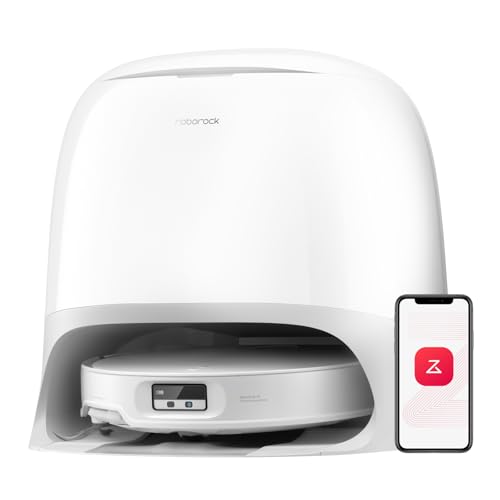
Roborock Qrevo Curv

Tall or double-layer door sills

Publishes both a standard-threshold and a double-layer threshold figure, which is the number most sill-blocked buyers are actually shopping for.

Published specifications

Max climb height
40mm (1.6in) double-layer, 30mm (1.2in) standardRoborock's own wording is that it can overcome standard thresholds up to 3cm and navigate double-layer thresholds up to 4cm. Stated maxima assume a clean square edge; a rounded or worn sill behaves differently.Source: Roborock Qrevo Curv product page — threshold crossing (retrieved 2026-09-01)
Main brush
DuoDivide dual rubber-bristle main brushRoborock describes it as two parallel short bristle rollers with spiral blades.Source: Roborock Qrevo Curv product page — DuoDivide main brush (retrieved 2026-09-01)
Stated runtime
Not publishedNot stated on the Roborock product page.
Dustbin
Not publishedNot stated on the Roborock product page.
Body height
104mm (4.1in)Listed dimensions 13.9 x 13.7 x 4.1in.Source: Roborock Qrevo Curv product page — dimensions (retrieved 2026-09-01)

What it does well

  • Roborock publishes a standard-threshold figure and a double-layer figure separately, which almost nobody else does
  • 17mm of mop lift is enough to keep a wet pad off medium-pile carpet
  • Anti-tangle design on the main brush and the side brush, not just one of them

What it does not

  • The 40mm headline is a double-layer threshold, not a single 40mm step — read the condition, not the headline
  • 104mm (4.1in) tall, so it will not fit under a low sofa or a kickboard gap

Who it is for

Older houses with real door sills, and anyone whose current robot announces itself stuck in the same doorway every day.

Skip it if

Your floors are flat and open. You would be paying a premium for chassis hardware your home never asks for.

Check price on Amazon

#ad how we are funded · no live price right now, so we show none

Full Roborock Qrevo Curv write-up

Pick 2

Roborock Saros 10R

Getting under low furniture

An 80mm body with no LiDAR mast, which is the practical answer to a robot that stops dead at the sofa every run.

Published specifications

Max climb height
Not publishedRoborock markets an industry-first AdaptiLift chassis on this model but states no climb height on the product page.
Navigation
StarSight Autonomous System 2.0Solid-state sensing rather than a raised LiDAR turret, which is what allows the low body.Source: Roborock Saros 10R product page — navigation (retrieved 2026-09-01)
Stated runtime
Not publishedNot stated on the Roborock product page.
Dustbin
Not publishedNot stated on the Roborock product page.
Dock
10-in-1 Multifunctional Dock 4.0 with hot-water mop washingSource: Roborock Saros 10R product page — dock (retrieved 2026-09-01)

What it does well

  • Solid-state sensing instead of a spinning turret, so the body can genuinely be low
  • 17mm mop lift, matching the Curv line
  • DuoDivide anti-tangle main brush

What it does not

  • No published climb height, which for a chassis-lift model is a strange omission
  • Camera-and-structured-light navigation is exactly the setup privacy-cautious buyers ask about

Who it is for

Homes where most of the dust lives under things — low sofas, bed frames, kickboard gaps.

Skip it if

Your problem is thresholds. Roborock markets an AdaptiLift chassis on this model but publishes no climb height for it.

Check price on Amazon

#ad how we are funded · no live price right now, so we show none

Full Roborock Saros 10R write-up

Pick 3

iRobot Roomba j9+

Homes with a dog and a real risk of an accident

The vacuum-only j9+ is the model whose obstacle avoidance is specifically marketed against pet waste, which is a failure mode with a very high cost.

Published specifications

Stated suction
Stated only as powerful suction, with no figureiRobot publishes no Pa rating, so this model cannot be compared numerically on suction with any other brand here.Source: iRobot Roomba j9+ listing description — manufacturer listing on Amazon.com (retrieved 2026-09-01)
Max climb height
Not publishedNot stated by iRobot for this model.
Mop lift
Not publishedThis model does not mop.

What it does well

  • Obstacle avoidance aimed at the one obstacle that ruins a floor
  • Sixty-day stated self-empty interval
  • Rubber brushes rather than bristles, which matters for long hair

What it does not

  • No published suction, climb height, runtime or bin capacity
  • Vacuum only — there is no mop on this trim

Who it is for

Dog owners, especially with a puppy or an older dog, who have had one bad run already.

Skip it if

You want mopping, or you want published specifications — iRobot states neither a suction figure nor a climb height.

Check price on Amazon

#ad how we are funded · no live price right now, so we show none

Full iRobot Roomba j9+ write-up

Questions people actually ask

+ Is LiDAR better than vSLAM for a robot vacuum?

LiDAR maps more accurately and works in the dark. vSLAM allows a lower body and no turret. If your rooms are dim, LiDAR. If your problem is furniture clearance, look at solid-state models rather than either.

+ Robot vacuum lidar vs camera: which is more private?

LiDAR and dToF map without a camera, so a model that uses them for both mapping and obstacle detection collects no images. A vSLAM robot cannot work without its camera. Many LiDAR models still add a camera for obstacles — check what you are actually buying.

+ Do LiDAR robot vacuums work in the dark?

Yes, completely. The laser supplies its own light, which is one of LiDAR's real advantages — a camera-based robot in an unlit room is navigating from memory rather than observation.

+ What is gyroscope navigation?

The cheapest mapping approach: the robot estimates position from wheel rotations and a gyroscope, with no external sensing. It produces a rough map that drifts over a long run. None of the models on this page uses it as their primary system.

+ Why does my robot map a room that does not exist?

Usually a mirror or a large pane of glass. A LiDAR return from a reflective surface reads as open space beyond it, so the map grows a phantom room. Blocking the reflective surface at robot height during the first mapping run fixes it.

Sources