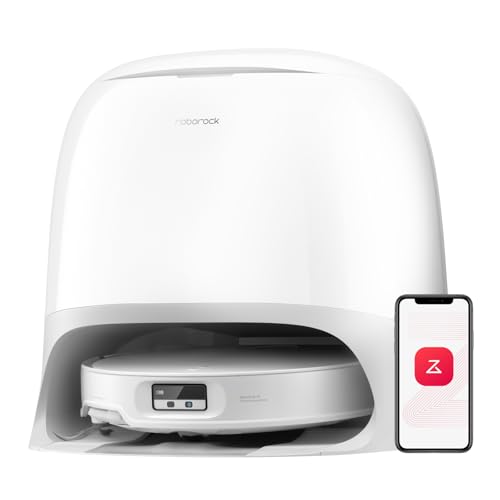
Yes, and the question is close to settled - every machine still on sale here maps. The useful question underneath it is what the map remembers, and that is published far less often.
Disclosure — some links on this page go to Amazon, and we earn a commission if you buy through them. It costs you nothing extra and it does not change what we recommend or in what order. The full disclosure.
Yes - buy a robot that maps, because an unmapped one cleans in a random pattern until the battery dies and cannot be told where not to go. Among the machines that map, the iRobot Roomba Max 715 Pet is the only one that publishes a stored-map limit worth having: iRobot states ClearView Pro LiDAR and up to five saved floor plans.
This used to be the biggest decision in the category and it has quietly answered itself. Of the 29 robot vacuums currently on sale that we track, every one maps. The last machine here that did not - the eufy 11S MAX, which bumped around in a random pattern and was none the worse for it in a studio flat - was withdrawn from sale in October 2026.
So the honest version of the question is no longer whether to buy mapping. It is what the map is actually good for, and which of its properties the maker is willing to put in writing.
What a map buys you, concretely
Methodical rows instead of random bouncing. A mapped robot covers the floor in overlapping passes and knows when it is finished. An unmapped one drives until the battery runs out, and may clean one area four times and another not at all.
No-go zones. This is the feature that keeps a robot usable. The corner with the cable nest, the pet bowls, the rug with the fringe it wants to eat - you draw a box around each and it stops being a problem. Without a map there is nothing to draw on.
Room and zone cleaning. "Clean the kitchen" rather than "clean the house", which is most of what you will actually use day to day.
Resume after charging. A mapped robot returns to the dock, charges, and goes back to the spot it stopped at. An unmapped one starts again from wherever it happens to be.
A record of where it has been, which is how you discover that it never goes into the back bedroom - usually because of a door sill. The threshold table is the next stop when that happens.
If you have read that robot vacuums are a gimmick, there is a fair chance the person who said it owned an unmapped one, and the conclusion was reasonable from the evidence they had.
The figure almost nobody publishes
Stored floor plans, across the 29 models currently on sale here
Model
Published map or floor limit
iRobot Roomba Max 715 Pet
Up to 5 maps
iRobot Roomba 105 Vac
Up to 3 maps
eufy Omni C20
Up to 3 floors
The other 26 models
No figure published
Counted 2026-10-17 from each maker's own product pages and manufacturer listings. Several makers describe multi-floor mapping without stating a limit; that is recorded as unpublished. Sources are on each model's spec sheet.
Three out of 29. That is the real state of disclosure on mapping, and it matters in exactly one situation: a house with more than one level. A robot that stores a single map rebuilds it every time you carry it upstairs, which costs a run and loses your zones. A robot that stores three or five recognizes where it is and loads the right plan.
iRobot is the interesting case. It publishes less about its hardware than anyone here - no climb height for any model, a suction figure for one of five - and it is the only maker that tells you how many floor plans its robots hold. If your house has stairs, read robot vacuums for multi-floor homes next: the map limit is one input into that decision and the carrying problem is the other.
Which sensing hardware, and why the name matters
Navigation system as each maker names it
28 of 29 models publish this figure. Every number below links to the page it came from.
Compiled from the manufacturers’ own published material — every row carries the date its figure was read. We have not measured any of these figures ourselves, see how we pick. Found an error? Tell us and we will correct it.
Read that ledger for the blanks as much as the names. Several machines - three of Dreame's five current models, the ECOVACS T30S Combo, the Roborock Qrevo (QV 35A) - say only "AI navigation", name an obstacle-avoidance feature instead of a mapping system, or name nothing at all. That is not a trivial gap. A robot that maps with a spinning laser turret has no camera in it. A robot that maps with a camera does. If you would rather not have a camera-equipped device driving itself around your house, you need the maker to tell you which it is, and several will not. What robot vacuums know about your house is the longer version of that argument.
The capability differences are real too, and they are set out properly in LiDAR vs vSLAM vs solid-state. The short version: a laser turret maps accurately in the dark and traditionally adds height to the robot, a camera system is cheaper and struggles in low light, and the newest designs get around the height penalty two different ways - Roborock states a retracting turret on the Qrevo CurvX and a turret-free solid-state system on the Saros 10R, and both reach a published 80mm body, the flattest figure anyone states here.
What mapping will not fix
A map is a model of your floor, and it cannot change the physical facts of the house. A mapped robot still will not climb a sill taller than its published clearance, still will not reach into a square corner, and still will not go upstairs. If any of those is the thing frustrating you, mapping is not the feature to spend on - the threshold table, corners and edges and why no robot climbs stairs are the three pages that are.
The other thing worth knowing before you buy is that the first map sets the behavior for months, and most bad robot experiences start with a bad first run rather than bad hardware. An hour of preparation beforehand is the highest-value thing you will do with the machine - how to get a good first map is that checklist.
How we picked
Criteria first, products second. These are the things we ranked on, stated before anything is recommended.
Treat mapping as a given and rank on what the map does. Every machine ranked here maps; the differences are in the sensing hardware, the stored floor count, and whether the maker will name either.
Count the published map limit. How many floor plans a robot stores decides whether it works in a house with more than one level, and only three of the 29 models on sale here state a number.
Credit a named sensing system. "AI navigation" is not a specification. A laser turret, a solid-state sensor and a camera behave differently and have different privacy implications.
Do not rank on map features we cannot verify from a product page. Room naming, zone cleaning and no-go zones are app behavior that changes with firmware, so they are described rather than scored.
No testing claims. We have never run these machines. See how we pick.
What we did not do: test any of these machines. We do not own one, we do not have a lab, and nothing on this page is written as though we did. The full method.
Quick picks
Ranked on the published specifications below. Tap a row to jump to the full write-up.
#
Product
Best for
Max climb
Price
1
iRobot Roomba Max 715 PetDual rubber anti-tangle brushes and a 90-day allergen-sealed dock — and the one place iRobot has printed an actual suction number instead of a multiple.
Roborock Qrevo CurvXThe highest published suction figure here paired with the highest published mop lift, which is the combination a mixed-floor home actually needs.
eufy Omni C20One of the two least powerful machines on this site on paper, and the one that tells you the most about itself for the money — suction, climb, mop lift, runtime, bin and body height are all published.
Every figure in this table is linked to the page it came from in the write-ups below. We have not tested any of these machines.
Top pick
iRobot Roomba Max 715 Pet
The only Roomba with a stated Pa figure
Dual rubber anti-tangle brushes and a 90-day allergen-sealed dock — and the one place iRobot has printed an actual suction number instead of a multiple.
One of the two least powerful machines on this site on paper, and the one that tells you the most about itself for the money — suction, climb, mop lift, runtime, bin and body height are all published.
All-in-One station: self-emptying into a stated 3.1L bag for up to 60 days in a pet-free home, mop washing, mop drying with room-temperature air, and water refilling from a 2.5L tankRoom-temperature drying rather than hot air. That is the single biggest difference between this station and the expensive ones, and it is the usual cause of a musty pad.Source: eufy Omni C20 product page — station (retrieved 2026-10-17)
What it does well
An 85mm body — among the flattest figures published by any maker here
Publishes suction, climb height, mop lift, runtime, dustbin capacity AND body height, which several machines at triple the price do not
A full station — self-empty, mop wash, mop dry and water refill — at the bottom of the range
What it does not
7,000 Pa sits near the bottom of the stated-suction range on this site
The station dries with room-temperature air, not hot air
eufy names an obstacle-avoidance method but no navigation system in the page text
Who it is for
A flat or a small house with low furniture and modest sills, where a full station at the lowest price matters more than a big suction figure.
Skip it if
You have deep carpet or a lot of pet hair. A stated 7,000 Pa sits near the bottom of every figure on this site, and no amount of disclosure changes what that means on a thick rug.
A genuinely good machine and the best spec sheet per dollar in Dreame's range - a published 22mm climb, a removable mop pad and a hot washboard dock. It is the skip on this page for one reason: Dreame describes its navigation as "AI navigation" and does not name the sensing hardware. That means you cannot tell from the product page whether this robot maps with a laser or with a camera, which is a capability question and a privacy question at once. Three of Dreame's five current models carry the same blank. If how the robot sees your house matters to you, buy from a maker that says.
Which mapping robot for which house
More than one floor - the Roomba Max 715 Pet, the only machine here that publishes a five-map limit. Read multi-floor homes for the carrying problem it does not solve.
You need the robot to map and still fit under low furniture - the Saros 10R or the Qrevo CurvX, both at a published 80mm. A laser turret traditionally costs you height; these two are the exceptions, by different means.
Mapping on the smallest budget, with nothing hidden - the eufy Omni C20. It states a three-floor limit, and it is the only machine in eufy's range that publishes all nine specifications we track.
You want to know whether there is a camera in it - check the navigation row on the specific model, not the brand. Roborock names a laser system on two of six current models and an avoidance feature on the rest; Dreame names the hardware on two of five.
Yes. A mapped robot cleans in methodical rows, lets you set no-go zones around cables and rug fringes, lets you send it to a single room, and resumes where it stopped after charging. An unmapped robot does none of those. It is also close to a non-decision now - every one of the 29 models currently on sale that we track maps.
+ How many floors can a robot vacuum map?
Almost no maker says. Only three of the 29 current models on this site publish a limit: iRobot states up to five maps for the Roomba Max 715 Pet and up to three for the Roomba 105 Vac, and eufy states multi-floor mapping for up to three floors on the Omni C20. The other 26 describe multi-floor mapping without committing to a number.
+ Is laser mapping better than camera mapping?
For accuracy in the dark, yes - a laser turret does not need light and a camera system does. The trade-offs are height, cost and privacy: a turret traditionally makes the robot taller, a camera is cheaper, and a camera means there is a camera in your house. The newest designs avoid the height penalty either by retracting the turret or by going solid-state. The full comparison is in LiDAR vs vSLAM vs solid-state.
+ What is the difference between mapping and obstacle avoidance?
The map is the floor plan - where walls, rooms and furniture edges are. Obstacle avoidance is live detection of things that were not there when the map was built, like a cable or a sock. They are separate systems, and a robot with an excellent map can still run over a shoe.
+ Do robot vacuums remember your house?
A mapping robot stores a floor plan and reuses it, which is how room cleaning and no-go zones work. Where that plan is stored, and what else is sent with it, varies by maker and is not always clearly published - what robot vacuums know about your house sets out what is and is not disclosed.
+ Will a mapping robot vacuum still get stuck?
Yes. A map tells the robot where the rooms are; it does not change how high the robot can climb or how wide its wheels are. The usual causes are a door sill above its published clearance, a rug it can ride onto but not off, and a gap under furniture just low enough to wedge in. Why the robot keeps getting stuck works through them in order.