Disclosure — some links on this page go to Amazon, and we earn a commission if you buy through them. It costs you nothing extra and it does not change what we recommend or in what order. The full disclosure.
A robot that gets stuck in the same place is meeting a physical trap the map cannot represent: a sill it can almost climb, a rug edge that lifts, a gap it fits into but not out of, a dark floor its sensors misread, or a chair base that catches the bumper. Identify which, then fix that one spot.
The instinct is to reset the robot or rebuild the map. Neither helps, because the problem is not in the map — it is in the room. Watch one full run, note where it happens, and work from there.
The five traps
1. A sill it can almost climb
The classic. The robot gets its front wheels up, the drive wheels reach the face of the sill, and it hangs there. It is the most common single cause, and the fix depends on the number: measure the vertical rise and compare it against the published climb height in the threshold table. If it is at or near the limit, the answer is a threshold ramp or a no-go zone, not a setting.
2. A rug edge
Same mechanism with a moving obstacle: the rug slides away as the robot climbs, so the edge never stops being an edge. A rug pad fixes most of these for a few pounds. Full treatment on stuck on rugs and fringe.
3. A gap it fits into but not out of
Under a low sofa, under a bed frame with a sloping underside, into the recess beside a kickboard. The robot enters on a slight downslope or where the clearance is marginal and cannot reverse out. The tell is that it always happens in the same place and always facing the same way. No-go zone, or physically block the gap. If it happens under most of your furniture rather than one piece, the robot is simply too tall for the house — see robot vacuums that fit under furniture.
4. A dark floor
Not stuck physically, stuck logically: the cliff sensors read a dark or high-gloss floor as a drop and the robot refuses to cross. It will report itself trapped on a perfectly flat surface. This is common enough to have its own page — dark floors.
5. Something catching the bumper
A cross-braced chair, a table with a low stretcher, a curtain hem, a floor-standing lamp base. The robot drives under, the bumper catches on something above the sensors' field of view, and it stalls. Trailing curtains are the most common version and the easiest to fix.
The order to work through
Clean the front caster and the drive wheels. Free, fast, and the most common mechanical cause.
Wipe the cliff sensors. Also free, and the cause of every logical stuck case.
Watch one full run and write down where it happens. One observation beats a week of guessing.
Measure the obstacle if it is a sill or a rug edge, and compare against the published climb figure for your model.
Fix the room, not the robot. A rug pad, a threshold ramp, a curtain tied back, a gap blocked.
No-go zone it if the physical fix is not practical. A robot that never visits a trap never gets stuck in it.
If it is stuck everywhere
Getting stuck in many different places, rather than one, is a different symptom. That usually points to a mechanical problem in the drive — a wheel not turning freely, a worn tread, a motor labouring — or to a map that has never localized properly. Try the maintenance pass first, then mapping tips.
If you are still choosing a model
The three picks below publish the climb figures that matter in the doorway case. They are recommended because they state a number you can measure against, which is the only thing that helps at the buying stage. Stairs are the one obstacle no model solves at all — no robot vacuum climbs stairs explains what the published climb figures actually describe.
Quick picks
Ranked on the published specifications below. Tap a row to jump to the full write-up.
#
Product
Best for
Dock
Price
1
Dreame X50 UltraThe only model here that legs itself over a step rather than driving at it, and the only one that publishes the condition attached to its own headline number.
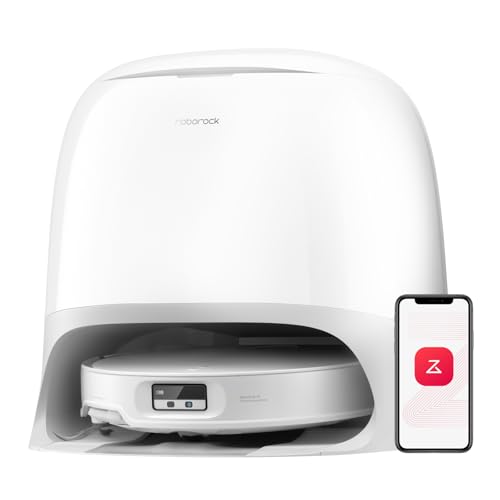
Roborock Qrevo CurvXThe highest published suction figure here paired with the highest published mop lift, which is the combination a mixed-floor home actually needs.
Every figure in this table is linked to the page it came from in the write-ups below. We have not tested any of these machines.
Top pick
Dreame X50 Ultra
The tallest published climb figure
The only model here that legs itself over a step rather than driving at it, and the only one that publishes the condition attached to its own headline number.
60mm over a series of steps, 42mm over a single stepDreame's own condition, quoted: "The gap between steps should be greater than 4cm. For a single obstacle crossing and a single vertical step, the highest obstacle crossing height is 4.2cm." The 6cm headline therefore does not describe a single door sill.Source: Dreame X50 Ultra product page — ProLeap step climbing (retrieved 2026-09-01)
Publishes the caveat as well as the headline, which is rarer than it should be
20,000 Pa stated peak suction and a 395ml on-board bin
Stated 220 minutes of runtime in quiet mode
What it does not
The legs add height and mechanical complexity to a machine that lives under furniture
10.5mm mop raise is modest next to the 17mm figures from Roborock
Who it is for
Split-level rooms, a sunken living room, or a doorway sill that has beaten every robot you have owned.
Skip it if
You read the 6cm headline and stopped there. Dreame's own footnote puts a single vertical step at 42mm, and 6cm only applies to a series of steps with more than 4cm between them.
+ Why does my robot vacuum keep getting stuck in the same spot?
It is meeting a physical trap the map cannot represent — usually a sill it can almost climb, a rug edge that lifts, or a gap it can enter but not reverse out of. Watch one run to identify it, then fix that spot rather than resetting the robot.
+ How do I stop my robot vacuum getting stuck under the couch?
Either block the gap or set a no-go zone. The failure is usually marginal clearance combined with a slight slope, so a robot that got under yesterday may not get out today. A slimmer robot is the buying answer; a no-go zone is the free one.
+ Why does my robot vacuum get stuck on a threshold it used to cross?
Usually hair packed into the front caster so it drags rather than rolls, or worn wheel treads, or a lower state of charge giving less torque. Clean the caster first.
+ Does a no-go zone stop the robot getting stuck?
Yes, for a known trap — the robot never goes there so it never gets caught. It is not a fix for getting stuck in many different places, which points at the drive or at a map that never localized properly.
+ Do threshold ramps help?
A lot, and they are the cheapest fix available. A small wedge against the sill turns a vertical face into a slope. Fix it down — a ramp the robot shoves around is worse than none.