Disclosure — some links on this page go to Amazon, and we earn a commission if you buy through them. It costs you nothing extra and it does not change what we recommend or in what order. The full disclosure.
A robot beaching on a rug edge is a climb-height problem and a traction problem, fixed with a rug pad and a no-go zone. A robot pulling at fringe is a rotating brush treating fringe as hair, and there is no setting that stops it — only a no-go zone along that edge. Both fixes are free.
These get reported as the same complaint and they are not. Work out which one you have before you change anything, because the fixes barely overlap.
If it is beaching on the edge
The robot drives at the rug, gets its front wheels up, and then the drive wheels spin on the compressed edge without moving it forward or back. Work down this list in order.
Put a rug pad under the rug. Most beaching is a rug moving away from the robot as it climbs, which turns a 15mm step into a moving one. This is the single most effective fix and it costs less than a replacement brush.
Check the edge height against the published climb figure. Measure the tallest point of the bound edge. If it is close to or above the figure in the climb table, the robot is at its limit and no setting will help.
Clean the wheels and the caster. Hair packed into the front caster stops it rotating, and a caster that drags instead of rolls will beach on an edge the robot cleared last month.
Approach angle. Some models handle a rug edge better perpendicular than at a shallow angle. If beaching happens at one specific corner, a no-go zone over that corner alone often solves it while leaving the rest of the rug cleaned.
No-go zone the rug, if the first four have not worked. A rug the robot cannot climb is a rug it should not be trying to climb.
If it is pulling at the fringe
This one is simpler and more urgent, because the damage is permanent. A main brush rotating at several hundred RPM applies real tension to anything it grips, and a rug fringe is a row of loose threads anchored into the weave. Once a strand is pulled through, it does not go back.
There is no anti-tangle design that solves this. Anti-tangle hardware diverts hair along the roller; it does not decide that a thread is attached to something valuable. The only reliable answer is to keep the brush away from the fringe.
Draw a no-go zone along the fringed edge, extending a few centimeters past the fringe onto the hard floor. Every mapping robot supports this.
Tuck the fringe under the rug if the rug tolerates it. Many do, and it removes the hazard entirely.
Clean that strip by hand. It takes seconds and it is the price of owning a fringed rug and a robot.
If you are still choosing a model
A published climb height is worth paying for if your rugs have substantial edges, because it is the one number that tells you whether the robot will manage before you find out the hard way. The two picks below publish the highest climb figures in this comparison, with the conditions each maker attaches.
Quick picks
Ranked on the published specifications below. Tap a row to jump to the full write-up.
#
Product
Best for
Suction
Price
1
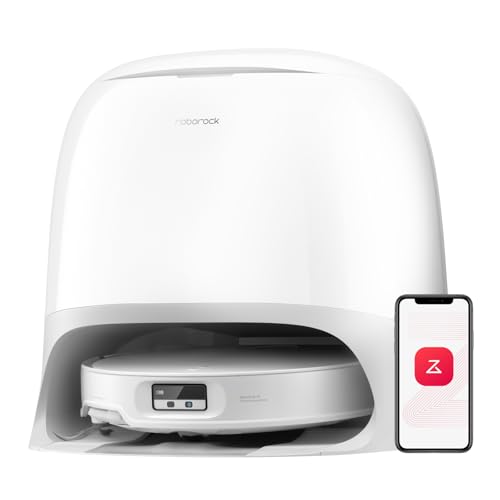
Roborock Qrevo CurvXThe highest published suction figure here paired with the highest published mop lift, which is the combination a mixed-floor home actually needs.
Dreame X50 UltraThe only model here that legs itself over a step rather than driving at it, and the only one that publishes the condition attached to its own headline number.
The only model here that legs itself over a step rather than driving at it, and the only one that publishes the condition attached to its own headline number.
60mm over a series of steps, 42mm over a single stepDreame's own condition, quoted: "The gap between steps should be greater than 4cm. For a single obstacle crossing and a single vertical step, the highest obstacle crossing height is 4.2cm." The 6cm headline therefore does not describe a single door sill.Source: Dreame X50 Ultra product page — ProLeap step climbing (retrieved 2026-09-01)
Publishes the caveat as well as the headline, which is rarer than it should be
20,000 Pa stated peak suction and a 395ml on-board bin
Stated 220 minutes of runtime in quiet mode
What it does not
The legs add height and mechanical complexity to a machine that lives under furniture
10.5mm mop raise is modest next to the 17mm figures from Roborock
Who it is for
Split-level rooms, a sunken living room, or a doorway sill that has beaten every robot you have owned.
Skip it if
You read the 6cm headline and stopped there. Dreame's own footnote puts a single vertical step at 42mm, and 6cm only applies to a series of steps with more than 4cm between them.
If the robot gets stuck in places that are not rugs, the general diagnosis is on why it keeps getting stuck.
Questions people actually ask
+ Why does my robot vacuum get stuck on my rug?
Usually the rug moves as the robot climbs, so the edge never stops being an obstacle. A rug pad fixes most cases. If the bound edge is close to the robot's published climb height, it is simply at its limit.
+ Will a robot vacuum ruin a rug fringe?
It can, and quickly. A rotating brush grips fringe the way it grips hair and can pull threads through the weave in a single run. Use a no-go zone along that edge before the first run rather than after.
+ Is there a setting that stops it eating fringe?
No. Anti-tangle brush hardware diverts hair along the roller; it cannot tell that a thread is attached to a rug. A no-go zone is the only reliable answer.
+ Can I stop the robot going on one specific rug only?
Yes — every mapping robot supports per-area no-go zones, and most support a mop-only exclusion so the rug still gets vacuumed but never mopped. Bump-and-turn models cannot do either, which is one of the real costs of a robot without a map.