Disclosure — some links on this page go to Amazon, and we earn a commission if you buy through them. It costs you nothing extra and it does not change what we recommend or in what order. The full disclosure.
An area rug on a hard floor is three problems at once. The bound edge is a small threshold the robot must climb. The pile is a surface the mop must not touch. And a fringe is, to a rotating brush, indistinguishable from a long strand of hair. A model that solves only one of the three is not enough.
Fitted carpet is simpler than this. The robot is either on it or it is not, and there are no edges in the middle of a room. An area rug creates a boundary in open floor, and boundaries are where robots fail.
Problem one: getting onto it
A rug with a bound or taped edge presents a small vertical step. Most rugs are well under any published climb height, but two cases are not: a thick rug with a stiff binding, and a rug over an underlay, which stacks. If the robot cannot climb the edge it will nudge the rug across the floor instead, which produces a bunched rug and an unhappy afternoon.
Published climb heights, for rug edges as well as door sills
5 of 6 models publish this figure. Every number below links to the page it came from.
iRobot states no threshold or obstacle climbing height for this model on its own product page.
Compiled from the manufacturers’ own published material — every row carries the date its figure was read. We have not measured any of these figures ourselves, see how we pick. Found an error? Tell us and we will correct it.
Problem two: keeping the mop off
A mop pad on an absorbent rug is the failure people regret most, because the damage is to the rug rather than the robot. The three answers are a lift height greater than the pile depth, a retracting arm that removes the pad from the floor plane entirely, or a dock that drops the pad before a vacuum-only run. The lift figures are compared on mop lift height.
Problem three: the fringe
A rotating brush treats fringe as hair and pulls hard. On a valuable rug this can damage the weave in a single run. There is no specification that solves this and no model that is immune. The fix is a no-go zone drawn along the fringed edge, which every mapping robot here supports and which takes about a minute in the app. Full detail on rugs and fringe.
How we picked
Criteria first, products second. These are the things we ranked on, stated before anything is recommended.
Published climb height, because a bound rug edge is a small threshold.
Published mop lift, or a mechanism that removes the pad from the floor entirely.
Whether the robot can be told to treat a rug as a no-go zone for mopping but not for vacuuming.
Carpet detection that works ahead of the robot rather than after it has driven on.
Anti-tangle brush design, because fringe behaves like hair.
What we did not do: test any of these machines. We do not own one, we do not have a lab, and nothing on this page is written as though we did. The full method.
Quick picks
Ranked on the published specifications below. Tap a row to jump to the full write-up.
#
Product
Best for
Suction
Price
1
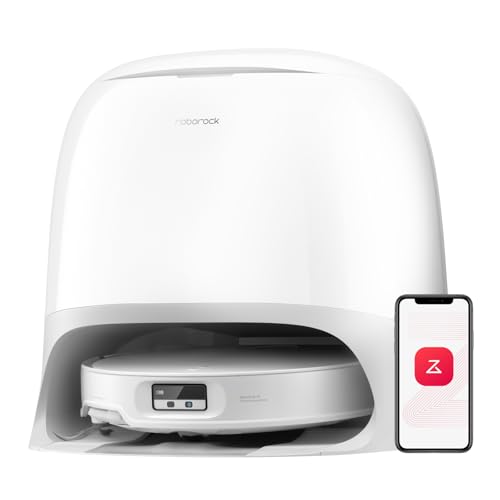
Roborock Qrevo CurvXThe highest published suction figure here paired with the highest published mop lift, which is the combination a mixed-floor home actually needs.
iRobot Roomba Combo j9+The mop arm retracts to the top of the robot rather than lifting a few millimeters, so it can mop and vacuum in one pass without routing around rugs.
Mopping without avoiding the carpet
Stated only as 100 percent stronger than the Roomba Combo i series
eufy X10 Pro Omnieufy publishes an obstacle clearance, a mop lift, two runtimes and both tank capacities — more of its own numbers than any other maker here.
Dreame L40s UltraStates 40mm of obstacle clearing and a fully detangling brush, which covers the two problems that actually send robots back to the shop.
Its self-rinsing roller mop is a better mechanism than a dragged pad, and on a flat hard floor it is a strong machine. On a floor with rugs it is the wrong buy for a specific reason: eufy publishes no mop-lift height for it, so there is no way to check whether the wet roller clears the rug, and no climb height to tell you whether it gets onto the rug in the first place. Two unknowns in the two specifications this page is about.
Questions people actually ask
+ Do robot vacuums go over rugs?
They climb onto them if the edge is below the robot's climb height, which covers most rugs. A thick rug over an underlay, or one with a stiff binding, can exceed it — and a rug that slides will be pushed instead of climbed.
+ What is the best robot vacuum for area rugs and hardwood?
One that publishes both a climb height and a mop lift, or one whose mop retracts entirely. Those two specs cover the two ways a rug on a hard floor goes wrong.
+ How do I stop a robot vacuum moving my rug?
Put a rug pad or grippers underneath. A rug that stays put is climbed; a rug that slides is pushed into a heap. This fixes more rug complaints than any setting in the app. If most of your home is rugs over hard floor, the wider buying decision is on robot vacuums for mixed carpet and hard floors.
+ Can I stop the robot mopping just the rug?
On mapped models, yes — most support a mop-only no-go zone separate from a full no-go zone, so the robot still vacuums the rug but arrives without the pad. It is one of the most useful settings in the app and almost nobody knows it exists.