Disclosure — some links on this page go to Amazon, and we earn a commission if you buy through them. It costs you nothing extra and it does not change what we recommend or in what order. The full disclosure.
No robot vacuum sold today climbs a staircase, at any price. The published climb figures — 22mm to 60mm — describe single obstacles like a door sill, not a flight of stairs. For a multi-level home the working answers are a robot per floor, or one robot carried between floors with multiple saved maps, plus a handheld for the treads.
This is one of the most common things people search for before buying a robot vacuum, and the honest answer is short: it does not exist as a consumer product. Not at the top of the range, not from any of the brands on this site. Prototypes and research machines that climb stairs have existed for years, and none has become something you can buy, because the engineering that gets a vacuum reliably up and down a flight without falling is a different and much harder problem than cleaning a floor.
That is worth saying plainly rather than burying, because the marketing around climb heights is written in a way that lets people hope otherwise.
What the climb figures actually describe
Every maker that publishes a climb height is describing a single obstacle, taken once: a door threshold, a transition strip between rooms, the lip at the edge of a tiled shower. The figures are real and useful — they are the reason our threshold table exists — but the unit is one step, not a staircase.
Published climb height, by model
5 of 7 models publish this figure. Every number below links to the page it came from.
60mm over a series of steps, 42mm over a single step
Dreame's own condition, quoted: "The gap between steps should be greater than 4cm. For a single obstacle crossing and a single vertical step, the highest obstacle crossing height is 4.2cm." The 6cm headline therefore does not describe a single door sill.Source: Dreame X50 Ultra product page — ProLeap step climbing (retrieved 2026-09-01)
Not stated. The sister X10 Pro Omni publishes 21mm, so the silence here is a choice rather than a house style.
Compiled from the manufacturers’ own published material — every row carries the date its figure was read. We have not measured any of these figures ourselves, see how we pick. Found an error? Tell us and we will correct it.
The Dreame X50 Ultra's entry is the closest anything here comes to the stair question, and it is worth reading carefully. Dreame publishes two figures: 42mm over a single step, and 60mm over a series of steps. That second number is not a staircase claim. A domestic stair riser is typically around 180mm — three times the figure — and the machine has no mechanism for descending one safely. It describes a short flight of shallow obstacles, like a stepped patio threshold.
The three arrangements that actually work
Once you accept that the robot stays on one level at a time, there are three sensible ways to cover a house, and the right one is mostly a budget question.
Carry one robot between floors. Cheapest, and fine if you will genuinely do it. The requirement is multi-map support — the robot has to recognize which floor it has been set down on instead of remapping from scratch. Most current models store two to five maps.
One robot per floor. The arrangement most people end up at, and the reason the cheap mapping models matter. Two £250 robots that both map properly will cover a two-story house better than one £900 flagship that only ever cleans downstairs.
A robot plus a handheld. The only arrangement that also cleans the stairs themselves, which no robot will ever do. The ECOVACS T30S Combo is the one machine here that ships both in a single dock; otherwise it is a robot and a separate stick vacuum.
The multi-map details — how many each maker stores, and what happens when you carry the robot upstairs without telling the app — are in best robot vacuums for multiple floors.
The dock is the part people forget
A robot carried between floors still has one dock, on one floor. On the other floor it is running on battery with nowhere to empty itself and nowhere to recharge mid-run, which for a self-emptying model removes most of the reason you bought it.
Some makers sell an additional dock; most do not, and almost none publishes the price of one on the product page. This is a real and under-discussed running cost of the carry-it-upstairs plan, and it is often what tips the arithmetic towards two cheaper robots instead of one expensive one.
Cleaning the stairs themselves
Whatever you buy, the treads are a manual job. They are the part of a house that collects the most and gets cleaned the least, and they are the reason a robot-only setup in a two-story home always feels incomplete.
A handheld or a stick vacuum with a crevice tool is the answer, and if you are buying both at once it is worth reading robot vs stick vacuum first — the two machines overlap less than people expect, and the honest conclusion there is that most houses want one of each rather than the best of one.
How we picked
Criteria first, products second. These are the things we ranked on, stated before anything is recommended.
A published climb height, so you can check the machine against the actual step or sill rather than against a marketing adjective.
A stated number of saved maps, because a multi-level house needs the robot to recognize which floor it has been carried to rather than remapping every run.
Whether the system includes something handheld, since the stair treads themselves will always be cleaned by a person.
Cliff-sensor behavior, because the failure that matters on a staircase is not the robot's inability to climb it — it is the robot's ability to fall down it.
Price, weighted differently here: two cheap mapping robots can be the better answer than one expensive one.
What we did not do: test any of these machines. We do not own one, we do not have a lab, and nothing on this page is written as though we did. The full method.
Quick picks
Ranked on the published specifications below. Tap a row to jump to the full write-up.
#
Product
Best for
Dock
Price
1
ECOVACS DEEBOT T30S ComboShips with a cordless stick vacuum docked alongside the robot, which is the only honest answer to stairs anyone sells.
Stairs and upholstery the robot cannot reach
All-in-one hub with dual self-emptying for the robot and the stick vacuum, plus hot-water mop washing
Dreame X50 UltraThe only model here that legs itself over a step rather than driving at it, and the only one that publishes the condition attached to its own headline number.
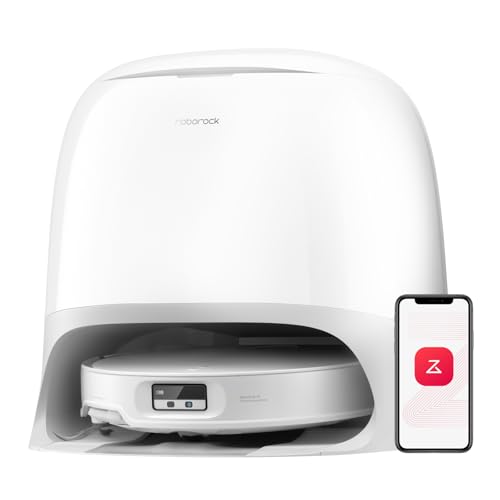
Roborock Qrevo CurvXThe highest published suction figure here paired with the highest published mop lift, which is the combination a mixed-floor home actually needs.
iRobot Roomba 105 VaciRobot's entry machine, and the first cheap one with real LiDAR — but it keeps the bristle brush, which is the wrong brush for a shedding household.
The only model here that legs itself over a step rather than driving at it, and the only one that publishes the condition attached to its own headline number.
60mm over a series of steps, 42mm over a single stepDreame's own condition, quoted: "The gap between steps should be greater than 4cm. For a single obstacle crossing and a single vertical step, the highest obstacle crossing height is 4.2cm." The 6cm headline therefore does not describe a single door sill.Source: Dreame X50 Ultra product page — ProLeap step climbing (retrieved 2026-09-01)
Publishes the caveat as well as the headline, which is rarer than it should be
20,000 Pa stated peak suction and a 395ml on-board bin
Stated 220 minutes of runtime in quiet mode
What it does not
The legs add height and mechanical complexity to a machine that lives under furniture
10.5mm mop raise is modest next to the 17mm figures from Roborock
Who it is for
Split-level rooms, a sunken living room, or a doorway sill that has beaten every robot you have owned.
Skip it if
You read the 6cm headline and stopped there. Dreame's own footnote puts a single vertical step at 42mm, and 6cm only applies to a series of steps with more than 4cm between them.
It is a good machine at its price and it is in our mop combo roundup for a reason. For a multi-level house it is the wrong purchase, because eufy publishes no climb height for it and states nothing about how many maps it stores. Both are the figures this page is about, and both are blank. Buy it for a flat single-story floor plan where neither question arises.
If your robot is falling down the stairs already
Check the cliff sensors first. They are small windows on the underside, usually four to six of them around the front edge, and a film of dust on one is enough to change what it reads. Wipe them with a dry cloth. If it still happens on a dark stair tread specifically, that is the infrared absorption problem rather than a fault, and the fix is a physical barrier or a no-go zone in the app.
If it is stopping short of the stairs and getting stuck instead, that is a different failure with different causes — start at why your robot vacuum keeps getting stuck.
Questions people actually ask
+ Is there a robot vacuum that climbs stairs?
No. Nothing on sale to consumers climbs a staircase, from any manufacturer, at any price. Published climb heights of 22mm to 60mm describe single obstacles such as a door threshold, not a flight of stairs — a domestic stair riser is around 180mm and none of these machines can descend one safely.
+ What does a 60mm climb height mean then?
It is Dreame's figure for the X50 Ultra over a series of shallow steps, alongside 42mm over a single step. Think of a stepped patio threshold or a raised room transition rather than stairs. It is the highest published climb figure of any model we cover, and it is still a third of a normal stair riser.
+ How do I clean a two-story house with a robot vacuum?
Either carry one robot between floors — which needs multi-map support so it recognizes each floor — or buy a cheaper mapping robot for each floor. The second option is often better value now that laser mapping has reached the bottom of the price range. Either way the stair treads themselves stay a manual job.
+ Will a robot vacuum fall down the stairs?
It should not: cliff sensors detect the drop and stop it. The known exception is a very dark stair tread, which can absorb the infrared the sensor relies on and read as solid floor. If your stairs are dark wood or have a black runner, watch the first few runs before leaving it unattended, and use a no-go zone if in doubt.
+ Can I use one robot on two floors?
Yes, if it stores multiple maps — most current models store two to five. The catch is the dock: it lives on one floor, so on the other the robot cannot empty or recharge mid-run. For a self-emptying model that removes much of the benefit, and a second dock is rarely cheap or clearly priced.
+ What actually cleans the stairs?
A person, with a handheld or a stick vacuum and a crevice tool. No robot does it. The ECOVACS T30S Combo is the only machine on this site that includes a handheld in the same dock as the robot, which is the tidiest single-purchase answer to a house with stairs in it.