Disclosure — some links on this page go to Amazon, and we earn a commission if you buy through them. It costs you nothing extra and it does not change what we recommend or in what order. The full disclosure.
A multi-floor home needs multi-level mapping: several saved maps and the ability to recognize which floor the robot has been put on. Most mapped models support it and cheap ones do not. The parts that are not solved are the dock, the stairs, and carrying the machine.
The software half of this problem is largely handled. The physical half is not, and it is worth being clear about which is which before you buy.
What multi-level mapping does
The robot stores a separate map per floor, and on starting a run it works out which one it is on by comparing what it sees against each saved map. When it matches, your no-go zones, room names and cleaning preferences for that floor all apply. Roborock states multi-level mapping down to the Q7 M5, which is at the cheaper end of its mapped range.
It is reliable when the floors are meaningfully different. Two floors with near-identical layouts — common in small terraced houses — can confuse the matching, and the robot will occasionally start cleaning with the wrong map loaded. When that happens the fix is usually to start the run manually from a distinctive room rather than the landing.
The three things software does not solve
The dock lives on one floor. The other floor has no dock, so the robot cannot self-empty, cannot refill, and cannot return to charge mid-run. Everything upstairs happens on one battery, and if it runs out it stops where it stopped.
No robot climbs stairs. Not one, at any price. The staircase itself is always a separate machine.
You are the transport. Weight and handle design matter more than the spec sheet suggests once you are carrying a machine up a flight of stairs several times a week.
Runtime matters more upstairs
On the floor without a dock, coverage on a single charge is the whole constraint. Published runtimes are quoted in the quietest mode on the easiest surface, so treat them as a ceiling — and note how few makers publish one at all.
Stated runtime, where the manufacturer publishes one
6 of 16 models publish this figure. Every number below links to the page it came from.
Compiled from the manufacturers’ own published material — every row carries the date its figure was read. We have not measured any of these figures ourselves, see how we pick. Found an error? Tell us and we will correct it.
Two robots, or one carried?
If you will be carrying the robot more than twice a week, a second cheaper robot on the upper floor is often the better answer. It removes the carrying, gives the upper floor its own dock, and a capable mapped mid-range model costs a fraction of a flagship. The flagship stays downstairs where the dock and the traffic are, and the best budget robot vacuums covers what to put upstairs. The same arithmetic across a single large floor is on robot vacuums for a large house. And if the floors are joined by a staircase the robot cannot use, no robot vacuum climbs stairs covers what to do instead.
How we picked
Criteria first, products second. These are the things we ranked on, stated before anything is recommended.
Whether the model stores several maps and recognizes which floor it is on.
Weight and handle design, because you will be carrying it.
What happens when it cannot find the dock — resume behavior or a dead robot on the landing.
Battery and coverage, since an upstairs run has no dock to return to mid-clean.
Whether a shared station covers the stairs themselves, which no robot does.
What we did not do: test any of these machines. We do not own one, we do not have a lab, and nothing on this page is written as though we did. The full method.
Quick picks
Ranked on the published specifications below. Tap a row to jump to the full write-up.
#
Product
Best for
Max climb
Price
1
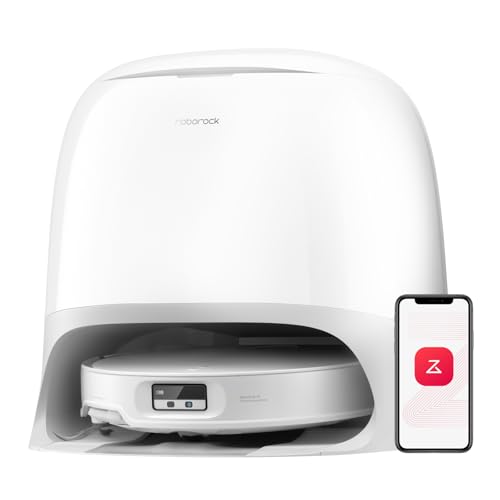
Roborock Qrevo CurvXThe highest published suction figure here paired with the highest published mop lift, which is the combination a mixed-floor home actually needs.
eufy X10 Pro Omnieufy publishes an obstacle clearance, a mop lift, two runtimes and both tank capacities — more of its own numbers than any other maker here.
No map means no multi-level mapping, so upstairs and downstairs are the same random pattern with no memory of either. It is genuinely convenient to carry, which is the one point in its favor here, and that is not enough. A second cheap robot per floor beats one unmapped robot on both.
Questions people actually ask
+ What is the best robot vacuum for multiple floors?
One with multi-level mapping, a manageable weight and a good handle. Most mapped models store several maps — Roborock states it down to the Q7 M5. The physical problems, dock and stairs, are not solved by any of them.
+ Can a robot vacuum go up stairs?
No. Nothing currently sold climbs a staircase, at any price. The staircase is always a separate machine, which is why a robot bundled with a stick vacuum is the closest thing to an integrated answer.
+ Do I need two robot vacuums for two floors?
Not necessarily, but it is often the better answer. If you would be carrying the robot more than twice a week, a second mid-range robot with its own dock upstairs usually beats one flagship being hauled up and down.
+ How does the robot know which floor it is on?
It compares what it senses against each saved map and picks the match. It works well when the layouts differ and less well when two floors are near-identical, where starting the run from a distinctive room helps.
+ What happens if it runs out of battery upstairs?
It stops and waits, because there is no dock to return to. That makes stated runtime the binding constraint on the floor without a dock, and it is one of the few places where the published figure genuinely matters.