Skip to content
Bristle & Bot
Mopping / comparison

Spinning pads vs roller mops

One scrubs harder and carries the dirt with it. The other rinses continuously and puts more water down. The right answer depends on your floor.

By Scooter M.Published
A folded microfiber cleaning cloth photographed close up

Disclosure — some links on this page go to Amazon, and we earn a commission if you buy through them. It costs you nothing extra and it does not change what we recommend or in what order. The full disclosure.

Spinning pads apply real downward pressure and scrub, but they carry whatever they lift until the dock rinses them. Roller mops rinse continuously during the run, so the water at the far end of the floor is as clean as at the start, at the cost of putting more water down.

These are genuinely different machines doing the same job, and most comparisons treat them as trim levels. They are not. Pick based on which failure mode you care about.

The two mechanisms, side by side
Spinning padsRoller mop
MechanismTwo circular pads rotating under the robot, typically around 200 RPM where publishedOne roller across the robot's width, with a scraper and a continuous water feed
Scrubbing pressureHigh — the pads press down and rotateModerate — the roller rotates but applies less point pressure
Water on the floorLess. The pad is damp and the floor dries quicklyMore. The roller is wet throughout the run
Dirt handlingCarries what it lifts until the dock rinses itScraped and rinsed continuously, so the far end of the floor gets clean water
Best onSealed wood, laminate, anywhere water is a riskTile, stone, textured surfaces, greasy kitchen floors
MaintenancePads to replace; simple mechanismMore moving parts and a scraper that needs clearing

Compiled from the manufacturers' published descriptions on 2026-09-01. ECOVACS states a 175mm roller diameter for its OZMO ROLLER; Roborock states 200 RPM spinning mops on the Qrevo S.

The case for spinning pads

Pressure is what removes a dried mark, and two rotating pads pressing down deliver more of it than a roller does. On a sealed wood floor or laminate the lower water volume is also an advantage rather than a compromise — those floors want damp, not wet.

The weakness is obvious once you look for it: the pad picks up whatever it lifts and keeps it. By the far corner of a large floor it is a dirty pad being pressed into a clean floor. Everything therefore depends on how often the robot returns to rinse, which depends on the dock — see self-cleaning docks.

The case for a roller mop

ECOVACS' OZMO ROLLER runs the width of the robot with a scraper and a water feed working against it continuously. The dirty water goes into a tank rather than back onto the floor, so the last room gets much the same treatment as the first. On a large tiled area that is a genuinely different result.

The costs are more water on the floor, which is why the roller is a poor match for older laminate with open seams, and a more complex mechanism to maintain.

Which to buy

Mostly sealed wood or laminate: spinning pads, on a low water setting, with a dock that dries them. Mostly tile or stone, especially a kitchen: the roller. Mixed, with deep carpet in the picture: the retracting design, because the mop leaving the floor entirely solves the transition rather than managing it.

Quick picks

Ranked on the published specifications below. Tap a row to jump to the full write-up.

#ProductBest forMop liftPrice
1
ECOVACS DEEBOT X8 PRO OMNIA rotating roller mop that washes itself continuously while it cleans, instead of pushing one increasingly dirty pad around the house.
Mopping that rinses as it goes10mm automatic
2
Roborock Qrevo CurvPublishes both a standard-threshold and a double-layer threshold figure, which is the number most sill-blocked buyers are actually shopping for.
Tall or double-layer door sills17mm
3
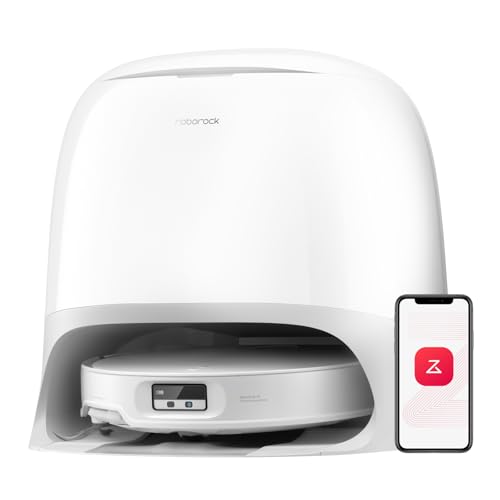
Roborock Qrevo SA published 10mm mop lift and a dock that washes, dries, empties and refills — the whole hands-off routine at the bottom of the range.
A first full-service dock10mm

Every figure in this table is linked to the page it came from in the write-ups below. We have not tested any of these machines.

Top pick

ECOVACS DEEBOT X8 PRO OMNI

Mopping that rinses as it goes

A rotating roller mop that washes itself continuously while it cleans, instead of pushing one increasingly dirty pad around the house.

Published specifications

Max climb height
20mm with the mop attachedECOVACS states the condition alongside the figure, which is unusual and useful — a mop-combo's climb is not the same as a bare chassis's.Source: ECOVACS DEEBOT X8 PRO OMNI product page — obstacle crossing (retrieved 2026-09-01)
Navigation
dToF with AIVI 3D 3.0 and a TruEdge 3D edge sensorSource: ECOVACS DEEBOT X8 PRO OMNI product page — navigation (retrieved 2026-09-01)
Stated runtime
Up to 291 minutesECOVACS states this for silent sweep mode on hard floors.Source: ECOVACS DEEBOT X8 PRO OMNI product page — runtime (retrieved 2026-09-01)
Dock
Self-emptying with 167F hot-water mop washing, hot-air drying and auto solution dosingSource: ECOVACS DEEBOT X8 PRO OMNI product page — station (retrieved 2026-09-01)

What it does well

  • Roller mop self-washes during the run rather than only at the dock
  • Publishes a threshold figure and states the condition (with mop attached)
  • Stated 291 minutes of runtime in silent mode

What it does not

  • 20mm climb is among the lowest published figures here
  • 0.22L on-board bin is small, so it leans hard on the dock

Who it is for

Hard floors that actually get dirty — kitchens, entryways, homes with dogs.

Skip it if

Your sills are tall. ECOVACS publishes 20mm with the mop attached, which is at the low end of this table.

Pick 2

Roborock Qrevo Curv

Tall or double-layer door sills

Publishes both a standard-threshold and a double-layer threshold figure, which is the number most sill-blocked buyers are actually shopping for.

Published specifications

Max climb height
40mm (1.6in) double-layer, 30mm (1.2in) standardRoborock's own wording is that it can overcome standard thresholds up to 3cm and navigate double-layer thresholds up to 4cm. Stated maxima assume a clean square edge; a rounded or worn sill behaves differently.Source: Roborock Qrevo Curv product page — threshold crossing (retrieved 2026-09-01)
Main brush
DuoDivide dual rubber-bristle main brushRoborock describes it as two parallel short bristle rollers with spiral blades.Source: Roborock Qrevo Curv product page — DuoDivide main brush (retrieved 2026-09-01)
Stated runtime
Not publishedNot stated on the Roborock product page.
Dustbin
Not publishedNot stated on the Roborock product page.
Body height
104mm (4.1in)Listed dimensions 13.9 x 13.7 x 4.1in.Source: Roborock Qrevo Curv product page — dimensions (retrieved 2026-09-01)

What it does well

  • Roborock publishes a standard-threshold figure and a double-layer figure separately, which almost nobody else does
  • 17mm of mop lift is enough to keep a wet pad off medium-pile carpet
  • Anti-tangle design on the main brush and the side brush, not just one of them

What it does not

  • The 40mm headline is a double-layer threshold, not a single 40mm step — read the condition, not the headline
  • 104mm (4.1in) tall, so it will not fit under a low sofa or a kickboard gap

Who it is for

Older houses with real door sills, and anyone whose current robot announces itself stuck in the same doorway every day.

Skip it if

Your floors are flat and open. You would be paying a premium for chassis hardware your home never asks for.

Check price on Amazon

#ad how we are funded · no live price right now, so we show none

Full Roborock Qrevo Curv write-up

Pick 3

Roborock Qrevo S

A first full-service dock

A published 10mm mop lift and a dock that washes, dries, empties and refills — the whole hands-off routine at the bottom of the range.

Published specifications

Max climb height
Not publishedNot stated on the listing.
Main brush
Not publishedBrush construction is not described on the listing.
Navigation
Smart obstacle avoidance, system not named on the listingSource: Roborock Qrevo S navigation — manufacturer listing on Amazon.com (retrieved 2026-09-01)
Dock
Self-drying, auto mop washing, self-emptying and self-refillingSource: Roborock Qrevo S dock — manufacturer listing on Amazon.com (retrieved 2026-09-01)

What it does well

  • Publishes its mop-lift height, which several pricier models do not
  • Full self-emptying, self-refilling, mop-washing dock
  • Spinning mops at a stated 200 RPM rather than a dragged pad

What it does not

  • 7,000 Pa is the lowest stated suction in the Qrevo line
  • No published threshold climb height

Who it is for

Small hard-floor homes with a rug or two, buying their first mop combo.

Skip it if

You have thick carpet. 10mm is the lowest published mop lift here and deep pile will still get damp.

Check price on Amazon

#ad how we are funded · no live price right now, so we show none

Full Roborock Qrevo S write-up

Questions people actually ask

+ Is a roller mop better than spinning pads?

On tile and stone, generally yes, because it rinses continuously and the far end of the floor gets clean water. On sealed wood and laminate the extra water is a liability rather than a benefit.

+ Do spinning mops actually scrub?

Yes — two pads rotating under downward pressure is real mechanical work, and it is more pressure than a roller applies at any single point. The limitation is the pad getting dirty, not the pressure.

+ How often does the dock rinse the pad?

It varies by model and by the mode you choose. Many let you set a rinse interval so the robot returns mid-run. On a large floor with spinning pads, a shorter interval is the single most useful setting to change.

+ Which mop uses less water?

Spinning pads. The pad is damp rather than wet, and the floor dries quickly. A roller mop keeps a wet surface against the floor throughout the run, which is exactly what you want on tile and exactly what you do not want on older laminate.

Sources