Disclosure — some links on this page go to Amazon, and we earn a commission if you buy through them. It costs you nothing extra and it does not change what we recommend or in what order. The full disclosure.
Carpet boost is three things happening at once: the robot detects the transition, raises fan power, and on a mop combo lifts or drops the wet pad. The detection is universal on mapped models. The mop response is where the published specifications differ, and it is the one that can ruin a rug.
The phrase covers more than it sounds like. Crossing from a hard floor onto carpet changes the robot's whole job, and a well-behaved machine changes three things in the same moment.
Detection
Most robots detect carpet by sensing the change in load on the brush motor or by an ultrasonic sensor reading the surface. Load sensing is reliable on a clear transition and less so on a thin, low-pile rug that barely changes the drag. Ultrasonic detection reads the surface ahead, which is what allows a robot to avoid a carpet entirely rather than noticing after it has already driven onto it.
The practical difference shows up with a mop attached. A robot that detects on load has already put a wet pad on the rug by the time it knows. A robot that detects ahead has not.
Power
The boost itself is straightforward: fan speed increases while the robot is on carpet and drops again when it leaves. What varies is headroom. A model running near its ceiling in normal mode has less left to give than one with a large published peak it only uses on carpet. This is the one place the pascal figures in the suction table tell you something practical, at least within a single brand's range.
The mop, which is the part that matters
Published mop lift height at the carpet edge
12 of 29 models publish this figure. Every number below links to the page it came from.
The highest mop lift figure on this site; the next highest published anywhere here is the 17mm Roborock states for the Qrevo CurvX and the Saros 10R. eufy states the chassis also raises for carpet up to 2in thick, but its regional pages disagree on that limit so it is not relied on.Source: eufy Omni S2 US product page — mop lift (retrieved 2026-10-17)
CONTESTED. eufy's E28 page says the mop lifts for carpet but gives no height; its US buying guide says 20mm and its FAQ says 12mm. Where a maker states two different figures for one machine we publish neither.
Compiled from the manufacturers’ own published material — every row carries the date its figure was read. We have not measured any of these figures ourselves, see how we pick. Found an error? Tell us and we will correct it.
Published lifts run from 10mm to 17mm on the models that state one. That range covers most rugs and none of the deep ones — a 10mm lift over a 15mm pile is a wet pad dragging through carpet. iRobot avoids the whole question by retracting the pad up onto the top of the robot, which is why it publishes no millimeter figure: the pad is not in the floor plane at all.
Several models advertise auto mop lifting and publish no height for it. That is not a small omission on a page like this one — the number is the entire specification. Full treatment on mop lift height compared.
Quick picks
Ranked on the published specifications below. Tap a row to jump to the full write-up.
#
Product
Best for
Suction
Price
1
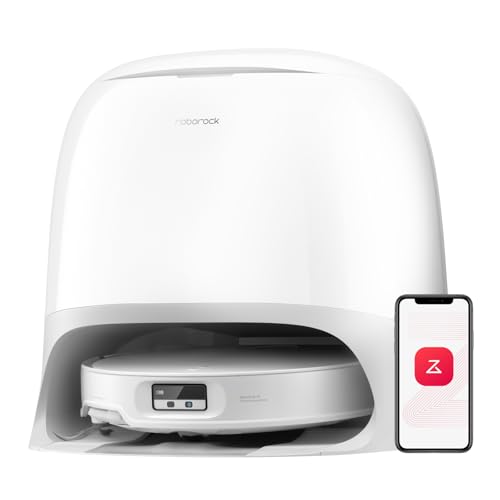
Roborock Qrevo CurvXThe highest published suction figure here paired with the highest published mop lift, which is the combination a mixed-floor home actually needs.
eufy X10 Pro Omnieufy publishes an obstacle clearance, a mop lift, two runtimes and both tank capacities — more of its own numbers than any other maker here.
Dreame X50 UltraThe only model here that legs itself over a step rather than driving at it, and the only one that publishes the condition attached to its own headline number.
The only model here that legs itself over a step rather than driving at it, and the only one that publishes the condition attached to its own headline number.
60mm over a series of steps, 42mm over a single stepDreame's own condition, quoted: "The gap between steps should be greater than 4cm. For a single obstacle crossing and a single vertical step, the highest obstacle crossing height is 4.2cm." The 6cm headline therefore does not describe a single door sill.Source: Dreame X50 Ultra product page — ProLeap step climbing (retrieved 2026-09-01)
Publishes the caveat as well as the headline, which is rarer than it should be
20,000 Pa stated peak suction and a 395ml on-board bin
Stated 220 minutes of runtime in quiet mode
What it does not
The legs add height and mechanical complexity to a machine that lives under furniture
10.5mm mop raise is modest next to the 17mm figures from Roborock
Who it is for
Split-level rooms, a sunken living room, or a doorway sill that has beaten every robot you have owned.
Skip it if
You read the 6cm headline and stopped there. Dreame's own footnote puts a single vertical step at 42mm, and 6cm only applies to a series of steps with more than 4cm between them.
One practical note that applies whichever model you buy: if you have a rug you genuinely care about, draw a no-go zone around it and clean it by hand. No published lift height is worth a ruined rug, and the setting takes a minute. For the wider buying decision, best robot vacuums for carpet puts boost, suction and mop lift together.
Questions people actually ask
+ What does carpet boost actually do?
It raises fan power while the robot is on carpet and, on a mop combo, lifts or drops the wet pad. On chassis-lift models it also raises the body so the brush meets deep pile properly.
+ Do all robot vacuums have carpet detection?
Every mapped model we cover claims it. Bump-and-turn models generally do not. What differs is how the detection works — sensing brush load after driving onto the carpet, or sensing the surface ahead.
+ Will the mop get my carpet wet?
Not if the lift height exceeds your pile depth, or if the pad detaches at the dock before a carpet run. It will if you have deep pile and a 10mm lift. When in doubt, use a no-go zone.
+ Can I turn carpet boost off?
On most mapped models yes, in the app, usually per room or per cleaning mode. It is worth turning off in a bedroom if the boosted fan is loud enough to wake somebody, which on the higher-suction models it is.