Disclosure — some links on this page go to Amazon, and we earn a commission if you buy through them. It costs you nothing extra and it does not change what we recommend or in what order. The full disclosure.
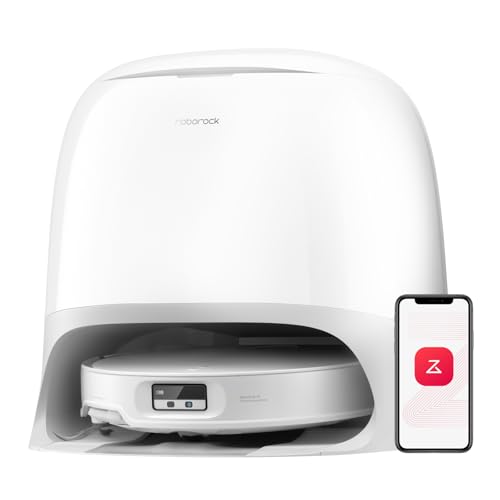
Carpet is the job where suction matters. Look for a published Pa figure, a stated carpet-boost behavior and a brush that agitates pile. The Roborock Qrevo CurvX publishes 22,000 Pa with a 17mm mop lift; the iRobot Roomba Max 715 Pet carries the highest listed figure at 30,000 Pa. Shark publishes no suction figure for any model.
On most of this site we argue that suction figures are oversold, and we stand by that. On hard floors, for pet hair, for crumbs under a kitchen table, the fan is not the constraint and a bigger number buys noise rather than cleaning. Carpet is the exception, and it is worth being precise about why: grit that has worked its way down into pile has to be pulled up against the grip of the fibers, and that is airflow work in a way that sweeping hair off tile is not.
What the Pa figure does and does not tell you
A Pascal figure is a peak pressure measured at the inlet, usually in the machine's loudest mode, by a method each manufacturer chooses for itself. There is no shared standard behind it. So it is a rough within-brand ranking and a very rough across-brand one — a 22,000 Pa Roborock is genuinely stronger than a 7,000 Pa Roborock, and is only probably stronger than a 19,000 Pa Dreame.
Published peak suction, by model
8 of 8 models publish this figure. Every number below links to the page it came from.
Compiled from the manufacturers’ own published material — every row carries the date its figure was read. We have not measured any of these figures ourselves, see how we pick. Found an error? Tell us and we will correct it.
Two entries in that table are not numbers at all. Shark publishes no suction figure for the PowerDetect, and iRobot publishes none for the 105 Vac — it states seventy times more power-lifting suction without naming what the baseline is. A multiple with no baseline cannot be compared with anything, including the 30,000 Pa its own Max 715 listing carries. The full cross-brand version of this table, and the list of who publishes nothing, is the suction power chart.
Carpet boost is the more useful claim
More telling than peak suction is whether the robot knows it is on carpet. A machine that runs one power setting everywhere either wastes battery on tile or under-cleans the rug. The makers that state a carpet-detection behavior are describing something you can check on the app's run log after the fact.
The detail of who claims what — and the several who describe it only in marketing copy without naming a mechanism — is in carpet boost compared. It is the single most inconsistently documented feature in this category.
Suction does not work without agitation
A vacuum with enormous suction and a poor brush will leave embedded grit exactly where it is. Pile grips debris mechanically, and something has to break that grip before airflow can carry it away. This is why the brush construction appears on a carpet page at all, when brush design is usually a pet hair argument.
It also cuts the other way. Bristle brushes, the wrong choice for hair, are good at digging into pile — which is why iRobot still fits them at the bottom of its range. For a carpeted home with nothing shedding in it, a bristle machine is a defensible buy. For a carpeted home with a dog, it is not, and that tension is the whole reason this site keeps the two questions on separate pages.
If the robot also mops
Every model in this roundup except the Roomba Max 715 also mops, which on a carpeted floor is a liability rather than a feature unless the mop gets out of the way. The published mop-lift height is the number that decides it, and on wool or a good rug a wet pad is not merely ineffective — it is damaging.
Published mop lift on the mopping models here
2 of 5 models publish this figure. Every number below links to the page it came from.
Compiled from the manufacturers’ own published material — every row carries the date its figure was read. We have not measured any of these figures ourselves, see how we pick. Found an error? Tell us and we will correct it.
How we picked
Criteria first, products second. These are the things we ranked on, stated before anything is recommended.
A published suction figure in Pascals. On carpet this is the one job where the number genuinely correlates with the outcome, because pulling grit up out of pile is airflow work.
A stated carpet-detection or boost behavior — the robot recognizing carpet and raising power rather than running one setting across the whole house.
Brush construction, because suction alone does not free anything embedded in pile. Agitation does, and the brush is what agitates.
A published mop-lift height on any model that mops, since a wet pad crossing carpet undoes the work and, on wool, does damage.
Whether the maker publishes these figures at all. Two of the brands we cover publish no suction figure for any model, and they cannot be ranked on this page.
What we did not do: test any of these machines. We do not own one, we do not have a lab, and nothing on this page is written as though we did. The full method.
Quick picks
Ranked on the published specifications below. Tap a row to jump to the full write-up.
#
Product
Best for
Suction
Price
1
Roborock Qrevo CurvXThe highest published suction figure here paired with the highest published mop lift, which is the combination a mixed-floor home actually needs.
iRobot Roomba Max 715 PetDual rubber anti-tangle brushes and a 90-day allergen-sealed dock — and the one place iRobot has printed an actual suction number instead of a multiple.
Dreame X50 UltraThe only model here that legs itself over a step rather than driving at it, and the only one that publishes the condition attached to its own headline number.
Dreame L40s UltraStates 40mm of obstacle clearing and a fully detangling brush, which covers the two problems that actually send robots back to the shop.
Dual rubber anti-tangle brushes and a 90-day allergen-sealed dock — and the one place iRobot has printed an actual suction number instead of a multiple.
The only model here that legs itself over a step rather than driving at it, and the only one that publishes the condition attached to its own headline number.
60mm over a series of steps, 42mm over a single stepDreame's own condition, quoted: "The gap between steps should be greater than 4cm. For a single obstacle crossing and a single vertical step, the highest obstacle crossing height is 4.2cm." The 6cm headline therefore does not describe a single door sill.Source: Dreame X50 Ultra product page — ProLeap step climbing (retrieved 2026-09-01)
Publishes the caveat as well as the headline, which is rarer than it should be
20,000 Pa stated peak suction and a 395ml on-board bin
Stated 220 minutes of runtime in quiet mode
What it does not
The legs add height and mechanical complexity to a machine that lives under furniture
10.5mm mop raise is modest next to the 17mm figures from Roborock
Who it is for
Split-level rooms, a sunken living room, or a doorway sill that has beaten every robot you have owned.
Skip it if
You read the 6cm headline and stopped there. Dreame's own footnote puts a single vertical step at 42mm, and 6cm only applies to a series of steps with more than 4cm between them.
On hard floors it is the bargain of this registry — hot-water pad washing and drying at the lowest price here. On carpet it is the wrong end of the range: 7,000 Pa is the lowest published suction figure of any model we cover, and Roborock publishes no mop-lift height for this trim, so you cannot check whether the wet pad clears your rug either. Both of the things that matter on this page are the two things it is weakest on.
Deep pile is a different question
Everything above assumes ordinary domestic carpet — a low or medium pile, the kind most houses have. Once the pile is deep enough that the robot's wheels sink into it, suction stops being the constraint and traction does. A machine that cannot climb onto the rug, or that beaches on it, does not get to use its 22,000 Pa at all.
If that is your situation, go to best robot vacuums for high pile carpet, which ranks on climb and clearance instead. And if the carpet in question is a rug on a hard floor rather than fitted carpet, area rugs is the page you want — the failure there is usually the fringe, not the pile.
Questions people actually ask
+ What is the best robot vacuum for carpet?
Of the models that publish a suction figure, the Roborock Qrevo CurvX is the strongest all-round answer: 22,000 Pa, an anti-tangle brush described in detail, and the highest published mop lift here at 17mm so the wet pad clears a low-pile rug. The iRobot Roomba Max 715 Pet carries a higher listed figure at 30,000 Pa and does not mop at all, which on a fully carpeted home is an advantage rather than a loss.
+ How much suction do I need for carpet?
There is no honest threshold number, because no two makers measure Pa the same way. Within a single brand's range, more is genuinely more on carpet. Across brands, treat a published figure mainly as evidence that the maker states numbers at all — and note that two brands we cover publish no suction figure for any model.
+ Is 11,000 Pa good for carpet?
It is mid-range by current published figures — comfortably above the 7,000 to 8,000 Pa entry models and well below the 20,000 Pa-plus flagships. On ordinary low-pile carpet that is enough. On deep pile, the deciding factor is more likely to be whether the machine can climb onto the rug at all than whether the fan is strong enough.
+ Will a robot vacuum wet my carpet when it mops?
Only if the mop-lift height is less than your pile depth, which is why the figure matters. 17mm clears a low-pile rug, 10.5mm clears little more than a flat mat, and several models publish no figure at all. Pads that detach entirely, as on the Dreame X40 Ultra, remove the risk rather than reducing it.
+ Do bristle brushes work better on carpet than rubber?
For digging grit out of pile, bristles have a real advantage, which is why they have not disappeared from the bottom of iRobot's range. The trade-off is that they are the worst construction for hair. If your carpeted house also has a shedding animal in it, take the rubber or dual-roller design and accept slightly less agitation.
+ Why do some makers not publish a suction figure at all?
They are not obliged to, and a figure invites comparison. Shark publishes none for the models we cover, and iRobot publishes relative multiples for most of its range rather than Pascals. We do not substitute an estimate or a reviewer's measurement in the gap, so those models are shown as not published and cannot be ranked on this page.