Disclosure — some links on this page go to Amazon, and we earn a commission if you buy through them. It costs you nothing extra and it does not change what we recommend or in what order. The full disclosure.
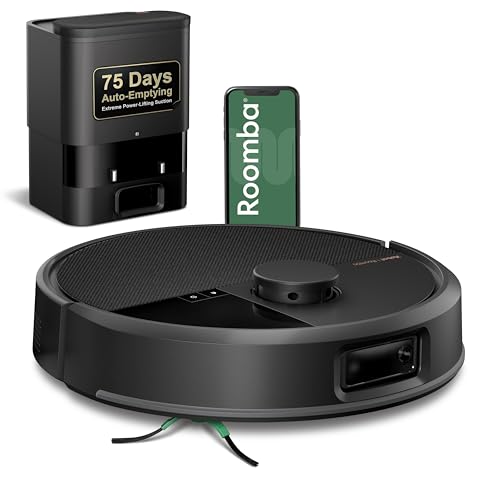
The iRobot Roomba Max 715 Pet is the pick: it is the only Roomba publishing a real suction figure at 30,000 Pa, runs dual rubber anti-tangle brushes, and seals its dust in an AllergenLock bag stated to last 90 days. The Shark PowerDetect Self-Empty is the bagless alternative if you would rather not buy bags at all.
The entire industry has spent five years adding mops to robot vacuums, and most of our own mopping hub is about how to buy one well. This page is the other argument. A mop combo brings a water tank, a set of pads, a drying problem, a dock that needs plumbing or refilling, and a genuine risk of dragging something damp across a rug. Some houses do not want any of that.
If yours is carpeted throughout, if you already own a steam mop you like, or if you simply want the robot to do one job without a second consumable stream, a vacuum-only machine is the better purchase. The difficulty is that there are not many left, and the ones that remain are not always well documented.
What you actually save by skipping the mop
A consumable stream. Mop pads wear and need replacing on a schedule nobody publishes clearly - see mop pad replacement. Skip the mop and that line item disappears entirely.
The damp-pad problem. A pad that sits wet between runs develops a smell, which is common enough that we have a whole page about it. No pad, no smell.
The carpet risk. Every combo manages this with a mop lift height, and most makers do not publish one. A vacuum-only robot cannot drag water onto a rug because there is no water.
Dock complexity. A vacuum-only base empties dust and nothing else. There is no clean-water tank to fill, no dirty-water tank to empty and no washboard to descale.
Money, usually. Vacuum-only trims are generally the cheaper version of the same hardware, because the mop is what the flagship premium is mostly buying.
The documentation problem in this corner of the market
Vacuum-only robots are now mostly entry and mid-range trims, and that is exactly where makers publish least. Four of the five machines on this page state no climb height, and three state no suction figure at all.
Stated suction across the vacuum-only machines here
3 of 5 models publish this figure. Every number below links to the page it came from.
Compiled from the manufacturers’ own published material — every row carries the date its figure was read. We have not measured any of these figures ourselves, see how we pick. Found an error? Tell us and we will correct it.
One number and four blanks. The Roomba Max 715 Pet's 30,000 Pa is the highest figure any maker publishes on this site, and it arrives from a company that has spent years describing suction as a multiple of an earlier Roomba. The other four tell you nothing you can check, which is why brush construction and dock interval do the ranking work here instead.
Dock intervals: the row that matters most on this page
If the appeal of a vacuum-only robot is low involvement, then how long the base runs before it needs you is the specification you are really buying. This is the one row where these machines are well documented.
Stated self-empty interval, vacuum-only machines
Model
Stated interval
Bagged or bagless
Roomba Max 715 Pet
90 days
Bagged, sealed AllergenLock
Roomba 105 Vac
75 days
Bagged
Shark PowerDetect Self-Empty
30 days
Bagless, with a HEPA claim
Roomba Max 705 Vac
not stated
Bagged
eufy 11S MAX
no dock
Onboard bin, emptied by hand
Each figure is the maker's own claim, measured under conditions none of them fully states - a 90-day interval assumes a household, not a floor area. Sourced on each model spec sheet. Bagged and bagless is a real trade-off and we cover it in self-emptying vs manual bin.
The Shark's 30 days is the shortest stated interval of any model on this site, and it is worth understanding why that is not simply worse. It is bagless, so those 30 days cost you nothing in consumables - you tip the bin out. The Roomba's 90 days is three times longer but each cycle consumes a bag you have to buy. Which is better depends entirely on whether you would rather spend money or attention.
How we picked
Criteria first, products second. These are the things we ranked on, stated before anything is recommended.
Vacuum-only means vacuum-only. Every machine ranked here ships without a mop pad, a water tank or a mopping mode. A combo running in vacuum mode does not qualify - you are still storing the tank and the pads.
Rank on brush construction first. With no mop in the picture, the main brush is what determines whether the machine copes with hair and carpet. Rubber and anti-tangle designs rank above bristle.
Credit a stated dock interval. The point of a vacuum-only robot is low involvement, so a maker that states how long the base runs before you touch it is telling you the thing that matters most here.
Published figures beat adjectives. "Extreme power-lifting suction" is not a specification. We mark it as unpublished and say so on the page.
No testing claims. We have never handled these machines - see how we pick.
What we did not do: test any of these machines. We do not own one, we do not have a lab, and nothing on this page is written as though we did. The full method.
Quick picks
Ranked on the published specifications below. Tap a row to jump to the full write-up.
#
Product
Best for
Mop lift
Price
1
iRobot Roomba Max 715 PetDual rubber anti-tangle brushes and a 90-day allergen-sealed dock — and the one place iRobot has printed an actual suction number instead of a multiple.
iRobot Roomba 105 VaciRobot's entry machine, and the first cheap one with real LiDAR — but it keeps the bristle brush, which is the wrong brush for a shedding household.
Every figure in this table is linked to the page it came from in the write-ups below. We have not tested any of these machines.
Top pick
iRobot Roomba Max 715 Pet
The only Roomba with a stated Pa figure
Dual rubber anti-tangle brushes and a 90-day allergen-sealed dock — and the one place iRobot has printed an actual suction number instead of a multiple.
It is frequently recommended as a cheap vacuum, and on the vacuum side it is a good one - 10,000 Pa, a JawScrapers Comb anti-tangle main brush and real 360-degree LiDAR at the lowest price on this site. It is the skip on this page because it is not actually a vacuum-only machine. It drags a pad at three water-flow levels, with no washing dock and no published mop lift, which is the worst of both worlds if you specifically do not want a mop: you still get the tank, the pad and the storage problem, and you do not get a mop worth using. If you want this robot, want it for the mapping.
Who each of these is actually for
A shedding house, or anyone with allergies - the Roomba Max 715 Pet. The sealed bag means emptying does not put the dust back in the air, and dual rubber anti-tangle brushes are the right construction for hair. See allergies and HEPA.
Someone who refuses to buy bags - the Shark PowerDetect Self-Empty. Bagless base, HEPA filtration claim, self-cleaning brushroll. You will empty it monthly and that is the deal.
A first mapped robot on a budget - the Roomba 105 Vac. LiDAR, up to three maps, rows rather than random, 75-day dock. Its bristle brush is the wrong choice for pet hair, and we say so on its card.
An existing Roomba household - the Max 705 Vac. It is iRobot's move to LiDAR and fixes the dim-room mapping complaint that dogged the camera-only models, though it publishes almost nothing.
A small flat and no interest in apps - the eufy 11S MAX. No maps, no cloud, no dock. It is thin enough to get under furniture the mapped machines cannot reach, and it will miss areas on any given run.
Questions people actually ask
+ Are there still robot vacuums that do not mop?
Yes, but fewer every year, and they are concentrated in entry and mid-range trims. iRobot keeps vacuum-only versions of most of its line - the Max 715 Pet, Max 705 Vac and 105 Vac are all vacuum-only - and Shark sells a vacuum-only PowerDetect. Most Roborock, Dreame and ECOVACS machines now include a mop.
+ Is a vacuum-only robot cheaper than a mop combo?
Generally yes, because the mop and its dock are what the premium is mostly buying, and you also avoid buying pads. We do not quote figures because prices move constantly - the buttons on this page render live from Amazon and vanish rather than going stale.
+ Can I buy a mop combo and just never use the mop?
You can, and plenty of people do. What you do not avoid is the purchase price of the mop hardware, the storage of pads and tanks, or a dock built around a water system you are not using. If you are certain you will never mop, the vacuum-only trim is the cleaner buy.
+ Do vacuum-only robots clean carpet better?
Not inherently. Nothing about omitting a mop improves suction or brush design. What it does remove is the risk of a damp pad crossing a rug, which is a real concern on combos whose makers do not publish a mop lift height - see our mop lift table.
+ Which vacuum-only robot has the strongest suction?
The Roomba Max 715 Pet at a stated 30,000 Pa, which is the highest figure published by any maker on this site. Bear in mind it is iRobot's own measurement on its own rig, with no shared standard behind it, so it is not directly comparable to a Roborock or eufy number.