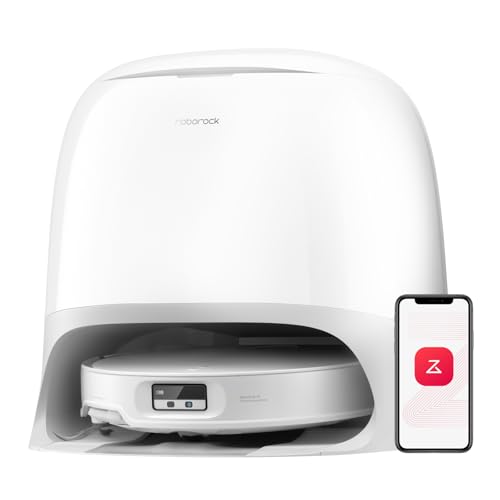
This is the widest documentation gap between any two brands on this site. It does not mean one brand cleans better - it means only one of them lets you check.
Disclosure — some links on this page go to Amazon, and we earn a commission if you buy through them. It costs you nothing extra and it does not change what we recommend or in what order. The full disclosure.
Roborock publishes a suction figure, a named brush and a navigation system for every model it sells; Shark publishes no suction figure for any of its three. Buy Roborock if you want to compare specifications before spending. Buy Shark for its self-emptying bases, which are described more clearly than the robots attached to them.
Most brand comparisons on this site are close-run. This one is not, and it is worth being precise about what the gap actually is. It is not a performance gap - we have not tested either brand and nobody has published a test of both that we would cite. It is a disclosure gap, and it is the largest one we have found.
Roborock states a Pascal figure for all seven machines it currently sells here. Shark states one for none of the three it sells here. That is not a rounding difference or a case of one number being missing from one model. It is a whole specification that one company treats as a headline and the other declines to print anywhere.
The row that does not exist
Stated suction, both brands, every current model
9 of 10 models publish this figure. Every number below links to the page it came from.
Compiled from the manufacturers’ own published material — every row carries the date its figure was read. We have not measured any of these figures ourselves, see how we pick. Found an error? Tell us and we will correct it.
Seven figures and three blanks, and the blanks are not at the bottom of the price range. The Shark PowerDetect 2-in-1 costs more than five of the seven Roborocks in that ledger and states less than the cheapest of them.
We should be fair about what this does and does not prove. A Pascal figure is measured on the maker's own rig with no shared standard, so Roborock's numbers are not independently verified either - we make that argument at length in our suction comparison. But a number from a stated method is still something you can hold a company to. "Powerful suction" is not.
What Shark publishes instead
It would be lazy to leave it there, because Shark does publish - just not the rows this category usually shops on. Set the two brands' disclosure side by side and each has a column the other leaves empty.
What each brand will tell you, across its current range
Specification
Roborock (7 models)
Shark (3 models)
Suction in pascals
7 of 7
0 of 3
Climb / threshold height
2 of 7
0 of 3
Mop lift height
2 of 7
0 of 3
Body height
3 of 7
0 of 3
Main brush described
6 of 7
3 of 3
Navigation hardware named
6 of 7
2 of 3
Dock interval in days or weeks
2 of 7
3 of 3
Counted across the models each brand currently sells and this site covers, from their own product pages and listings. Every underlying figure is sourced on that model's spec sheet.
That last row is the one Shark wins outright. Every Shark here states how long its base runs before you touch it - 60 days on the PowerDetect 2-in-1, 60 on the Matrix Plus, 30 on the PowerDetect Self-Empty. Roborock states an interval on only two of seven, and on the rest you are guessing at the thing that decides how often the robot needs you.
Where the two brands actually overlap
Both brands ship LiDAR. Roborock names its systems - PreciSense, RetractSense, StarSight - and Shark states 360-degree LiDAR with a 3D sensor on the PowerDetect 2-in-1 and LiDAR mapping on the Matrix Plus. On that row they are genuinely comparable and genuinely similar.
Both also take anti-tangle seriously and describe it in mechanical terms. Roborock's DuoDivide splits the roller with spiral blades; its JawScrapers Comb scrapes hair off the roller as it turns. Shark's self-cleaning brushroll is on all three models and is the feature the brand is best known for. If long hair is your problem, both brands have a real answer and our long hair guide ranks them against everyone else.
Where they stop overlapping is mopping. Roborock publishes a mop lift height on two models, 17mm on both, which is the figure that decides whether a mop combo can be trusted to cross a rug. Shark sells two 2-in-1 machines and publishes no lift figure for either. See mop lift height compared.
How we picked
Criteria first, products second. These are the things we ranked on, stated before anything is recommended.
Count what each brand publishes across its whole current range, not just its flagship. One well-documented halo model does not make a brand easy to shop.
Compare only where both makers publish. Where one side is blank we say so and move on rather than substituting a reviewer's measurement or a guess of our own.
Give Shark full credit where it does publish. Dock intervals, brushroll behavior and navigation hardware are real specifications and Shark states all three clearly. A brand that publishes differently is not the same as a brand that publishes nothing.
Treat Pa figures as within-brand only. All of Roborock's come from one rig. There is nothing to compare them against on the Shark side, which is the entire point of this page.
No durability, reliability or service claims in either direction. We have not run these machines for years and will not pretend to know how they age. See how we pick.
What we did not do: test any of these machines. We do not own one, we do not have a lab, and nothing on this page is written as though we did. The full method.
Quick picks
Ranked on the published specifications below. Tap a row to jump to the full write-up.
#
Product
Best for
Suction
Price
1
Roborock Qrevo CurvXThe highest published suction figure here paired with the highest published mop lift, which is the combination a mixed-floor home actually needs.
Shark PowerDetect 2-in-1 (AV2800ZE)Shark markets NeverStuck technology specifically at the getting-stuck problem, and then publishes no climb height to back it up.
Roborock Q7 M5+The Q7 M5's LiDAR and anti-tangle hardware, plus the self-emptying dock the plain M5 does not come with — and a stated bag capacity to go with it.
Its Matrix Clean grid pattern is a genuinely distinct idea - the robot crosses the same area twice at right angles rather than once - and the bagless self-empty base is stated at 60 days. It is the skip because it is the oldest machine in this comparison, it states no suction figure, no climb height and no mop lift, and we could not confirm a current new-condition listing for it when checking prices for this page. If you find one new and cheap it is not a bad robot; it is simply the least checkable purchase here.
Which brand for which buyer
You want to compare before you spend - Roborock, without much argument. It is the only brand here whose whole range can be put in a table.
You want the base emptied and forgotten - Shark. Every model states an interval, and the 30-day and 60-day figures are among the clearest commitments any maker on this site makes.
You have thick thresholds - Roborock. The Qrevo CurvX publishes 40mm; no Shark publishes a climb figure at all, so buying one for a house with door strips is a gamble.
You have low furniture - Roborock. The 80mm bodies on the CurvX and Saros 10R are the flattest here and Shark publishes no body height.
You want a vacuum and nothing else - the Shark PowerDetect Self-Empty. It is the only machine in this comparison that does not try to mop, which is a legitimate thing to want and something we cover in robot vacuums that do not mop.
You want the cheapest machine with real published specs - Roborock again, at the Q7 M5+ or the Q7 M5. See the best Roborock for how that range sorts out internally.
Questions people actually ask
+ Is Roborock better than Shark?
We cannot tell you that, because neither of us has tested them. What we can tell you is that Roborock publishes a suction figure, a climb height or a body height where Shark publishes none of the three. If your decision depends on checkable specification, Roborock is the only one of the two you can check.
+ Why does Shark not publish a suction figure?
Shark has not said, and we will not guess at a motive. The observable fact is that across all three models we cover, its product pages describe suction in words - "powerful", "PowerDetect" - and never in pascals or air watts.
+ Which is better for pet hair, Roborock or Shark?
Both describe a real anti-tangle mechanism, which puts them ahead of several rivals. Shark's self-cleaning brushroll appears on all three of its models; Roborock's DuoDivide and JawScrapers Comb appear across most of its range and are paired with a published suction figure. On published data Roborock gives you more to go on; on brushroll design the two are close. See best for pet hair.
+ Does Shark empty itself for longer than Roborock?
On stated figures, yes, and by a clear margin. Shark states 60 days on two models and 30 on the third. The only Roborock intervals we have are up to seven weeks on the Q7 M5+ and ten weeks on the Qrevo Curv S5X, and the other five models state nothing. Bear in mind every one of these figures is the maker's own claim under unstated conditions.
+ Is the Shark PowerDetect 2-in-1 worth its price?
It is the least documented machine in its price bracket, which is why our high-end roundup lists it as the one to skip. The base is real hardware and the LiDAR is a genuine spec. But at that money three rivals publish suction, climb height, mop lift and body height, and Shark publishes none of them.